World’s Largest Air Force Expands Fleet with More B-21 Stealth Bombers

Northrop Grumman’s Future with the B-21 Raider Program
FALLS CHURCH, VIRGINIA— Northrop Grumman anticipates securing new contracts from the U.S. Air Force (USAF) for its B-21 Raider stealth bomber program by the year’s end, as stated by Chief Executive Officer Kathy Warden.
The company is currently in negotiations with the Air Force to expedite B-21 production, bolstered by $4.5 billion in federal funding recently ratified by Congress.
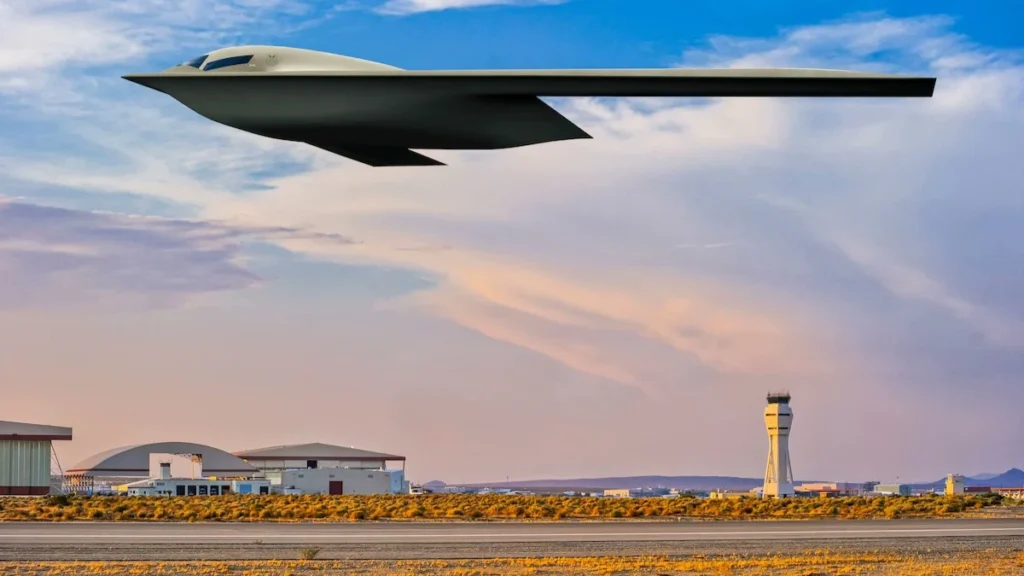
Photo: US Air Force | X
Advancing the B-21 Production Timeline
Northrop Grumman has confirmed that ongoing discussions with the Air Force are aimed at finalizing an agreement to accelerate the manufacturing of the B-21. The $4.5 billion allocation from the July budget reconciliation bill is specifically intended to speed up production timelines. However, the progress of these negotiations has faced setbacks due to ongoing government shutdowns.
Should the deal proceed, Northrop plans to further invest to enhance its production capabilities. Although Warden did not provide a specific revenue forecast, she suggested that an increase in production could lead to better financial outcomes by 2026.
“The actual production rates, timing, and outcomes of those negotiations will define the financial profile,” Warden noted during the earnings call.
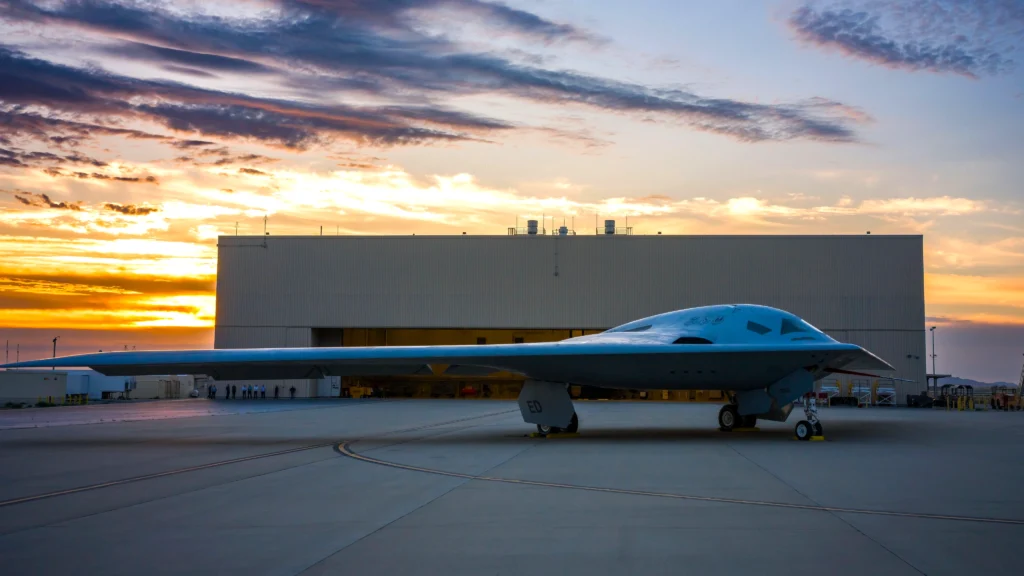
Photo: US Air Force | X
Future B-21 Fleet Expansion
The U.S. Air Force plans to acquire at least 100 B-21 Raiders to replace its aging B-2 Spirit and B-1 Lancer aircraft in the 2030s. Any additional orders will be subject to separate discussions, as noted by Warden.
Northrop is hopeful about securing the contract for the third low-rate initial production lot of the B-21, along with advanced procurement for the fifth lot by late 2025. These agreements are essential for ensuring a consistent production flow.
Progress in B-21 Flight Testing
Flight testing for the second B-21 aircraft commenced in September, marking a significant milestone in the program’s development. This phase will focus on integrating critical weapons and mission systems, essential for delivering operational capability.
Several additional B-21 units are undergoing ground testing prior to their inaugural flights, aimed at validating performance metrics and minimizing technical risks before full-scale production kicks off.
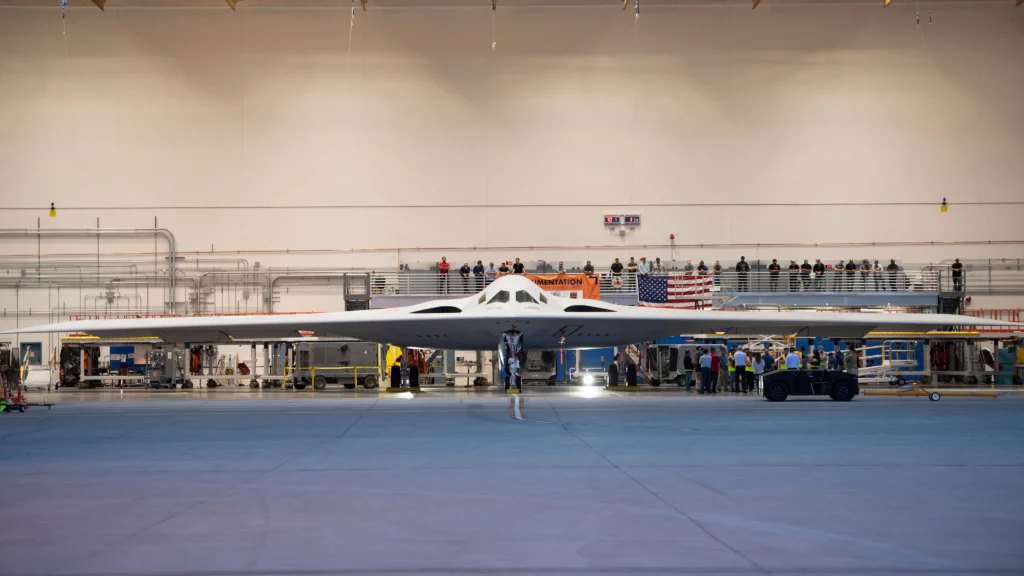
Photo: US Air Force | X
Navigating Production Costs
Earlier this year, Northrop reported a $477 million loss due to adjustments in its production processes aimed at speeding up manufacturing. Chief Financial Officer Ken Crews explained that the unforeseen costs associated with the initial engineering and flight test aircraft contributed to increased overall production expenses.
A restructuring of the B-21 contract has enabled Northrop to lower its expected losses across remaining low-rate production lots, compensating for earlier overruns.
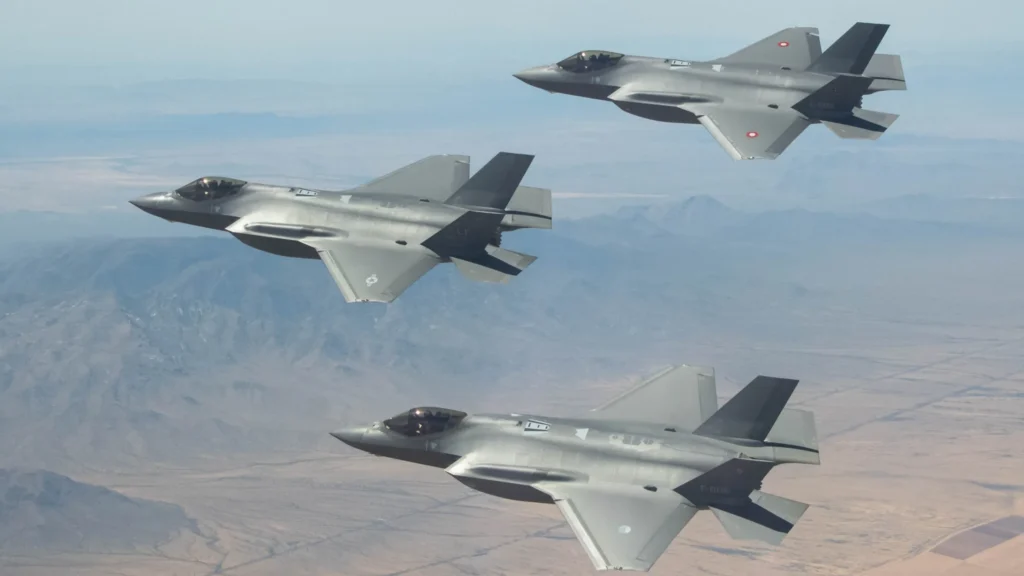
Photo: Airman 1st Class Dominic Tyler 56th Fighter Wing Public Affairs. | Wikimedia Commons
Pentagon’s Procurement Strategies
A recent report from the Center for a New American Security (CNAS) stresses the need for the Pentagon to reallocate its defense funding, which has heavily favored research and development (R&D) at the expense of procurement. This shift is critical for addressing the growing vulnerabilities in the U.S. Joint Force, especially in the context of potential high-intensity conflict.
The analysis, published on October 21, indicates that the Air Force now operates its smallest combat fleet in decades. It advocates for redirecting funds towards the quicker procurement of aircraft like the F-15EX, F-35, and B-21.
Addressing Capability Shortfalls
The report highlights that the Air Force’s R&D budget has skyrocketed by 136 percent, while procurement growth was only 61 percent over the past decade. This disparity has created a situation where aircraft retire more quickly than they can be replaced, bringing down the total fleet size to below 5,000.
Retired Col. John “JV” Venable, now at the Mitchell Institute for Aerospace Studies, claims this “divest to invest” strategy has undermined operational readiness. Innovation alone cannot ensure military strength without physical assets.
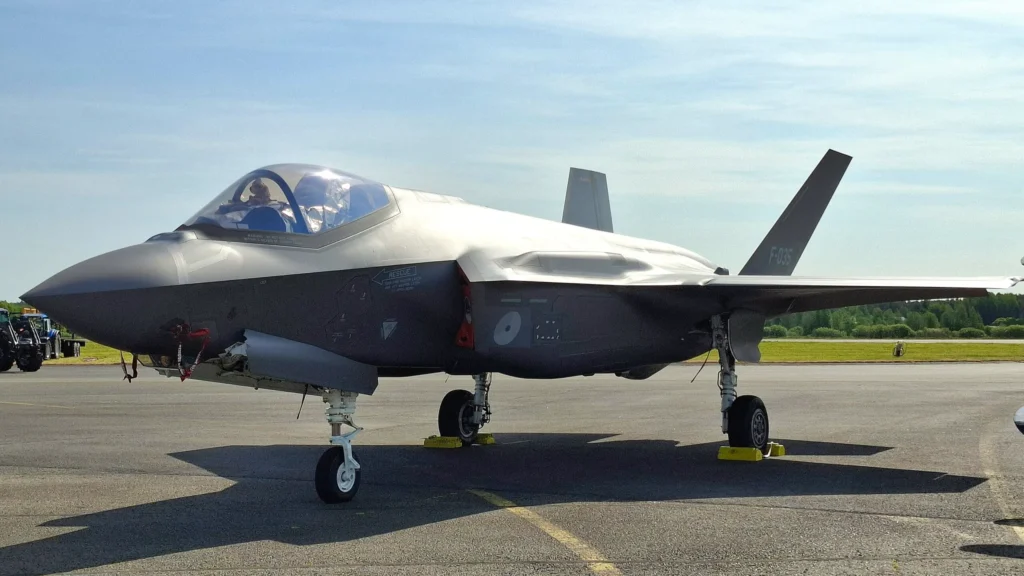
Photo: V | Wikimedia Commons
Critical Areas for Rebalancing Defense Strategy
The CNAS report identifies five key capability areas for reassessment: combat aircraft, space, command and control, munitions, and logistics. Combat aviation is highlighted as the most urgent area needing attention.
The report’s authors recommend speeding up the procurement of F-35 and F-15EX fighters, alongside investing in Collaborative Combat Aircraft (CCA), to expand fleet capacity. The B-21 Raider is cited as a crucial opportunity to deploy transformative capabilities faster than projected.
Though future platforms like the F-47 air dominance fighter are acknowledged, full deployment may not occur until the 2030s. As it stands, the F-35 remains the only U.S. stealth fighter in active production.
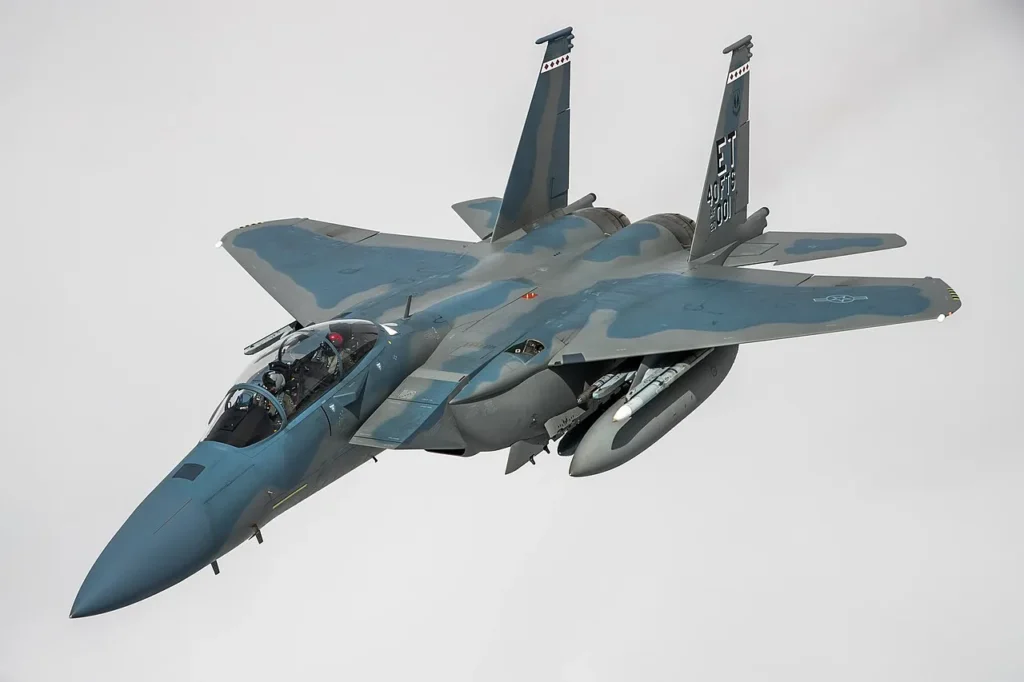
Photo: Wikipedia
Divergent Perspectives on Funding Urgency
While Venable aligns with the CNAS recommendations, he advocates for a more immediate budget reallocation. He proposes directing $6.6 billion from the Air Force’s 2026 R&D budget into procurement and readiness.
This plan aims to ramp up production to 72 F-35s, 24 F-15EXs, and 21 B-21s annually, figures Venable believes are necessary for restoring combat strength and deterrence capability.
Ultimately, both the CNAS and Venable’s analyses converge on a key point: for the Air Force to meaningfully deter or confront near-peer threats, it must transition from R&D-heavy budgets to a focus on operational readiness.
What are your thoughts on the future of the B-21 Raider and the state of U.S. Air Force capabilities?