Major Expansion at Asia’s Largest Airport Displaces 16,000 Families

NOIDA- The Uttar Pradesh government has recently given the green light to the Rehabilitation and Resettlement (RR) scheme for Phases 3 and 4 of the Noida International Airport (DXN), recognized as the largest airport project in Asia, located in Jewar. This authorization came shortly after Chief Minister Yogi Adityanath’s inspection of the site and will facilitate the acquisition of 1,857 hectares across 14 villages, affecting nearly 16,000 families.
Following public consultation, officials have re-evaluated the number of impacted families, reducing the figure from 17,945 to 15,920 as they finalized the draft scheme. This approval represents a significant advancement in the development of one of India’s most ambitious airport initiatives.

Noida Airport Expansion Strategy
As part of the approved scheme, families who will be displaced due to the Noida International Airport (DXN) expansion will only be relocated after they receive new residential plots and the construction of their houses is completed.
Landowners will receive compensation of Rs 4,300 per square meter, a 40% increase from previous rates.
Authorities have earmarked 438 hectares across six villages—Mangroli, Neemka Shahjahanpur, Alavalpur, Sadullapur, Ahmadpur Chauroli, and Jewar Banger—for the creation of new resettlement communities.
The initiative will kick off with social impact assessments, followed by public notifications. Officials anticipate that the complete rehabilitation process will span approximately two years.
Infrastructure Development and Project Scale
The expansion of Noida International Airport aims to establish it as one of India’s foremost greenfield aviation centers.
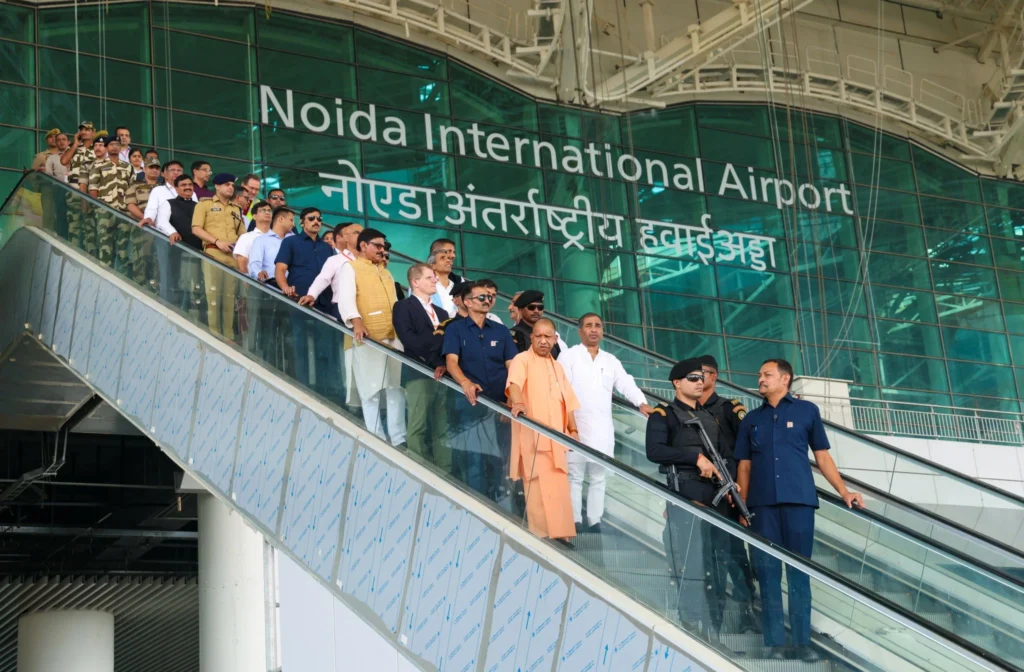
During his latest review, Chief Minister Adityanath examined the progress of the domestic terminal, security systems, and traffic management strategies, both on-site and through aerial assessments.
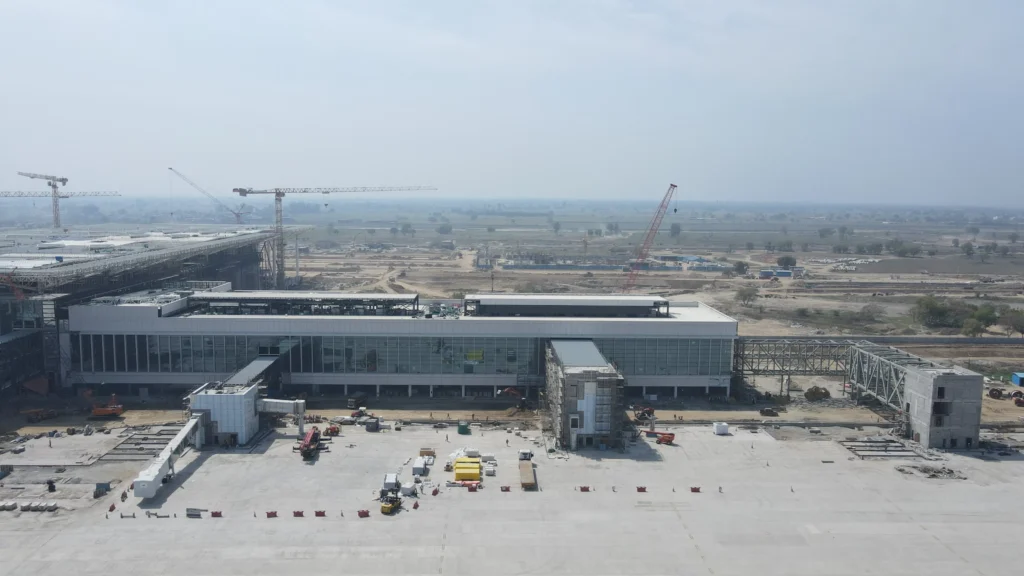
Officials provided insights into technical preparations concerning the terminal building, runway tests, and facilitated a check flight in accordance with DGCA regulations.
While the Union Civil Aviation Minister previously indicated an October 30 inauguration, the operational launch is now projected for mid-December, with preparatory work slated for completion by November 15.
Airport Capacity and Future Developments
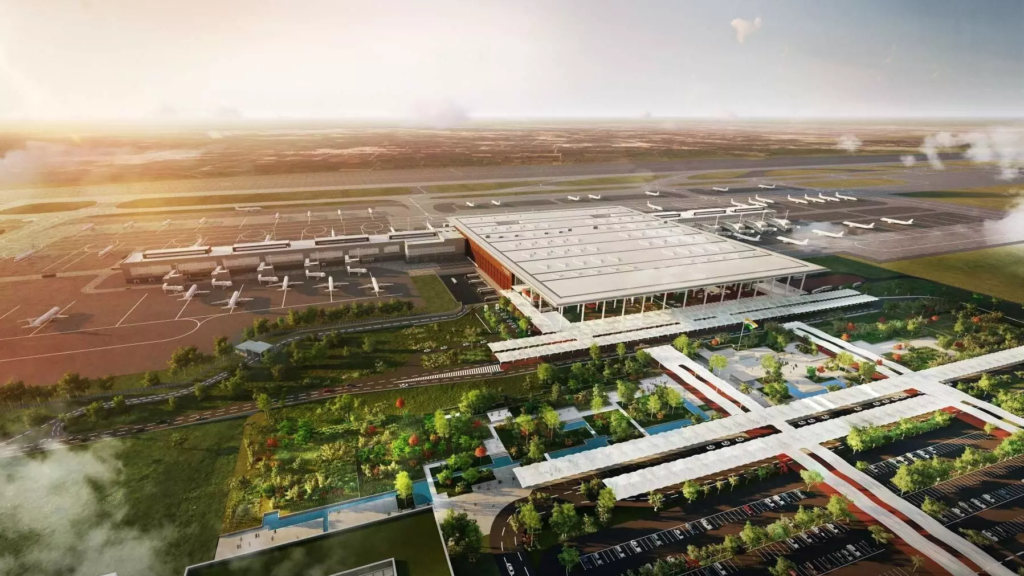
Upon full operation, the Noida International Airport (DXN) will cover 11,750 acres, feature five runways, and accommodate up to 300 million passengers annually. In its first phase, the airport is expected to handle 12 million passengers and facilitate 150 daily flights.
To date, 6,700 acres have been secured, with another 5,100 acres planned for upcoming phases. The land acquisition cost is projected at Rs 5,000 crore, while construction expenses are estimated at around Rs 7,000 crore.
This airport’s establishment is anticipated to alleviate congestion at Indira Gandhi International Airport (DEL) in Delhi, enhancing connectivity throughout northern India.
Connecting Ten Cities in Initial Phase
The Noida International Airport (DXN) is on track for its inauguration, set to emerge as one of India’s premier aviation centers. Situated in Jewar, it is poised to commence operations by late November or early December, marking a significant milestone for western Uttar Pradesh.
Developed by Yamuna International Airport Private Limited (YIAPL), the airport will initially serve domestic flights to ten major Indian cities. Airlines such as IndiGo (6E) and Akasa Air (QP) are preparing to operate from DXN, with Air India (AI) and SpiceJet (SG) expected to join later.
The first operational phase will connect passengers to Varanasi (VNS), Lucknow (LKO), Ahmedabad (AMD), Mumbai (BOM), Bengaluru (BLR), Hyderabad (HYD), Jaipur (JAI), Chennai (MAA), Patna (PAT), and Srinagar (SXR).
Over 150 domestic flights are anticipated daily, providing convenient travel options for residents of Delhi-NCR and western Uttar Pradesh.
Its prime location near the Yamuna Expressway makes the airport a viable alternative to Delhi’s Indira Gandhi International Airport (DEL), effectively reducing congestion and improving accessibility for travelers across northern India.
IndiGo and Akasa Air to Establish Bases
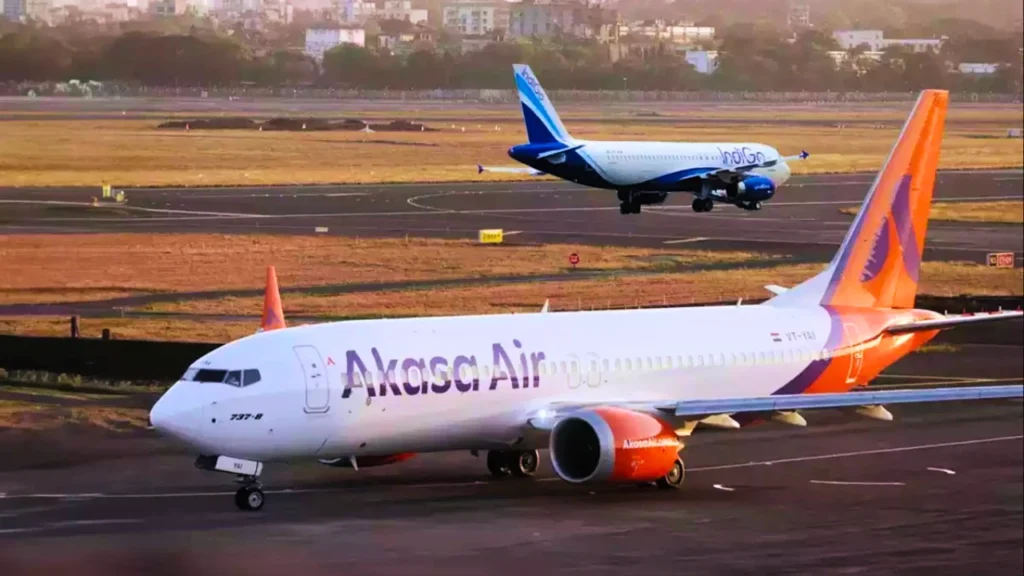
IndiGo (6E) and Akasa Air (QP) have signed agreements to utilize DXN as their primary operational hub, including facilities for aircraft parking and maintenance. This partnership is set to significantly augment passenger traffic from the outset.
This strategy will also allow the airlines to optimize their operations in the Delhi-NCR region by balancing flight distribution between IGI and Noida airports. Both airlines aim to provide frequent services to major metro and Tier-2 cities, ensuring DXN becomes a vital domestic gateway from day one.
Cargo and International Expansion in Phase 2
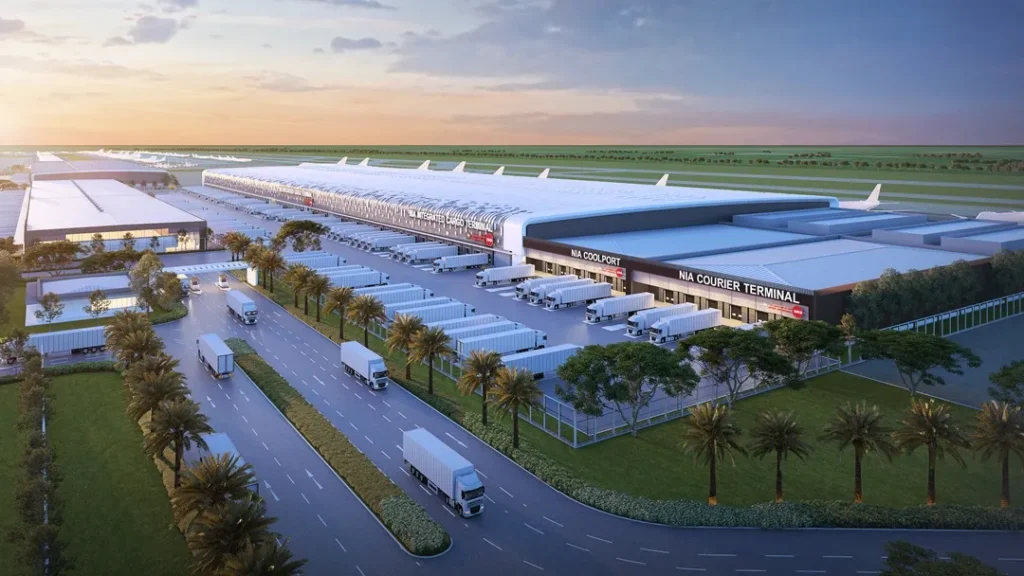
International flights are slated to commence in the second phase once domestic operations stabilize, while cargo services will launch on the first day, targeting destinations in the Middle East.
The cargo terminal will provide support to farmers in regions such as Etah, Etawah, Mathura, Agra, Aligarh, Meerut, and Muzaffarnagar, enabling quicker exports of perishable goods like fruits and vegetables.
This direct access to global markets is projected to create new revenue streams and enhance the agricultural supply chain in western Uttar Pradesh.
Chief Minister Yogi Adityanath continues to oversee the project’s progress, stressing the importance of timely completion and readiness for DGCA licensing ahead of the launch. Once regulatory approvals are acquired, ticket sales for the initial wave of domestic routes will commence.
The inauguration of Noida International Airport is expected to transform regional air connectivity, generating thousands of direct and indirect jobs while drawing in new business and tourism prospects.
With plans for future expansions, DXN is poised to become a crucial aviation hub connecting northern India with both domestic and international destinations.