Emirates President Pushes Boeing for New 777-10: What’s Next?

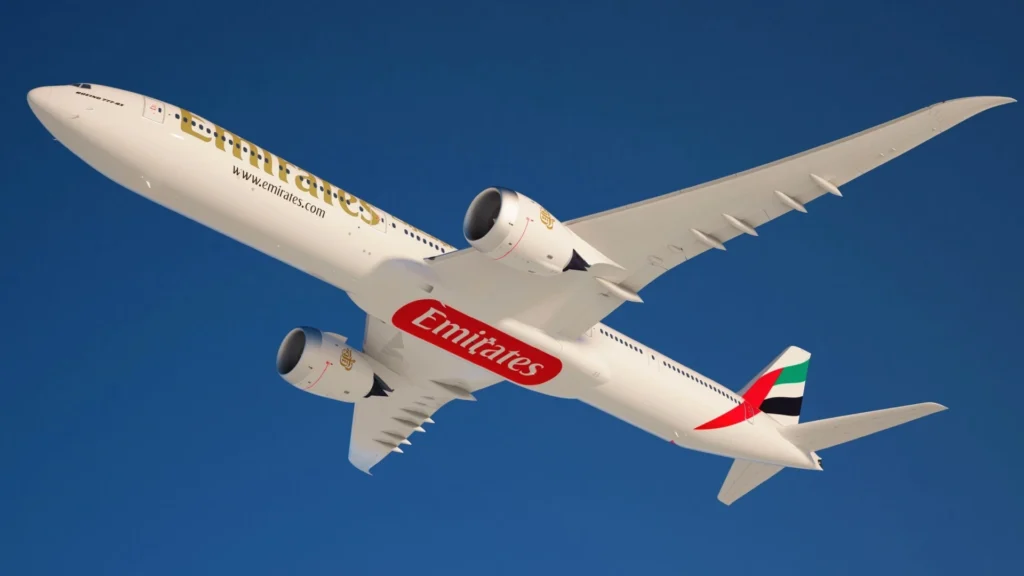
DUBAI- Emirates Airline is gearing up for a future beyond the Airbus A380, exploring potential widebody aircraft options to replace the iconic superjumbo at Dubai International Airport (DXB). The airline has approached Boeing regarding the feasibility of a stretched 777-10, while keeping an eye on Airbus’s plans for a more spacious A350-2000 variant.
The organization acknowledges that neither option can completely replicate the A380’s grandeur. However, both models could effectively address the upcoming capacity deficit as the A380 phase-out begins in the late 2030s and early 2040s.
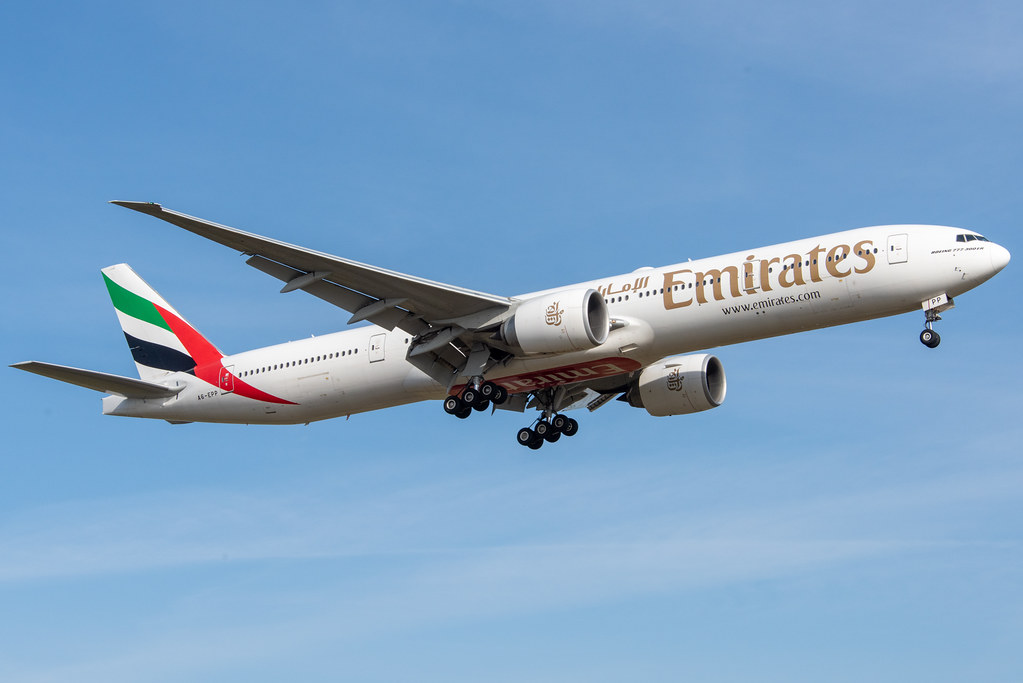
Emirates Considers Boeing 777-10
Emirates president Tim Clark emphasized the airline’s need for a study into the 777-10 to ensure sufficient seat availability when the A380 retires.
This request follows a recent order for 65 additional Boeing 777-9 aircraft, with the first deliveries anticipated in early 2027.
Clark noted that Emirates wants to play an active role in shaping the design of the 777-10, highlighting the potential for the GE9X engine and the structural support necessary for a stretch.
According to Clark, the 777-10 has the potential to come close to meeting Emirates’ seat requirements. He aims for it to enter service within the 2030s, but recognition is needed for Boeing to complete the 777-9 certification first.
Clark explained that stretched versions of existing aircraft often emerge five or six years after initial entry, aligning with Emirates’ long-term fleet strategy.
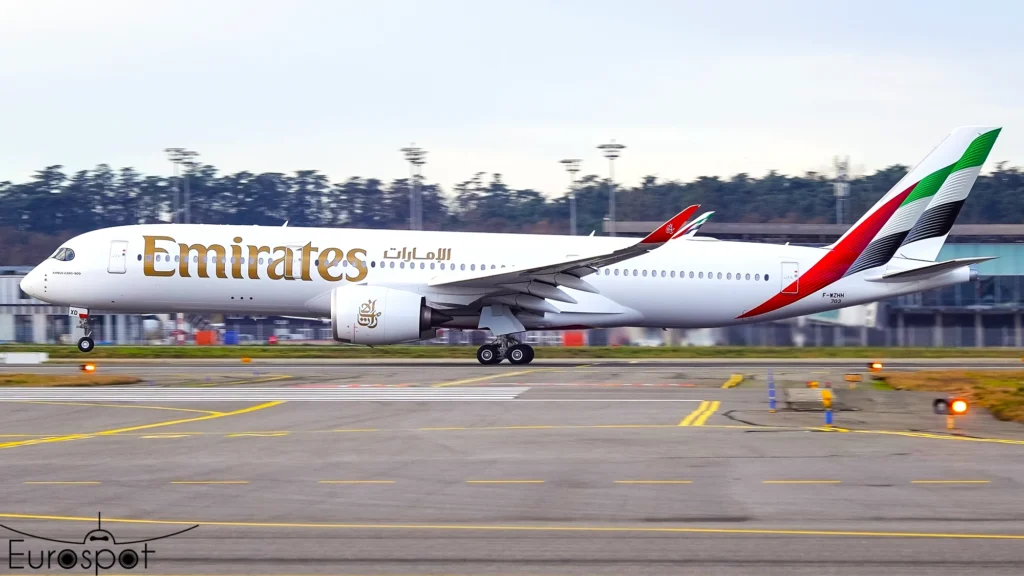
Although Airbus is working on an A350-2000, specifics are still unclear. Clark suggested that any new variant would require an upgraded engine that meets the operational demands of the Middle East, dismissing the Trent XWB-97 as insufficient.
These engine-related reservations are the primary reason Emirates is hesitant to order the A350-1000, and Clark played down speculation of an imminent order at the upcoming Dubai Airshow.
Technical Factors in Widebody Development
Clark emphasized that Emirates has historically influenced aircraft design, significantly affecting how variants are developed. However, he noted that such collaboration hasn’t been as effective with Airbus regarding the potential A350-2000.
Despite expressing concerns, Airbus seems to be moving forward on its own path. Clark discussed ongoing communications with Airbus Commercial CEO Christian Scherer about the limited capacity of the A350-1000, highlighting a consistent challenge to find a model that meets Emirates’ high-density, long-distance needs.
The demand for enhanced takeoff performance in warmer climates remains a technical challenge. Emirates believes that an A350-2000 would require a new engine design beyond the existing Trent XWB series. Without this capability, the airline is unable to commit to a considerable order of A350 jets.
Demand for Larger Aircraft
Clark projects that many airlines worldwide will seek larger widebody options due to increasing airport congestion, infrastructure limitations, and slot constraints. The A380 proved that high-capacity aircraft could foster growth where airport expansions are limited.
Nonetheless, earlier attempts to develop oversized aircraft often fell flat. Singapore Airlines, for instance, previously explored a stretched A350 and a stretched 777X, neither of which materialized.
Emirates became the sole airline to effectively operate the A380 on a large scale, shaping global airport planning and passenger expectations. Its future fleet decisions will continue to steer the development of widebody aircraft for decades to come.
Emirates and Safran Collaboration
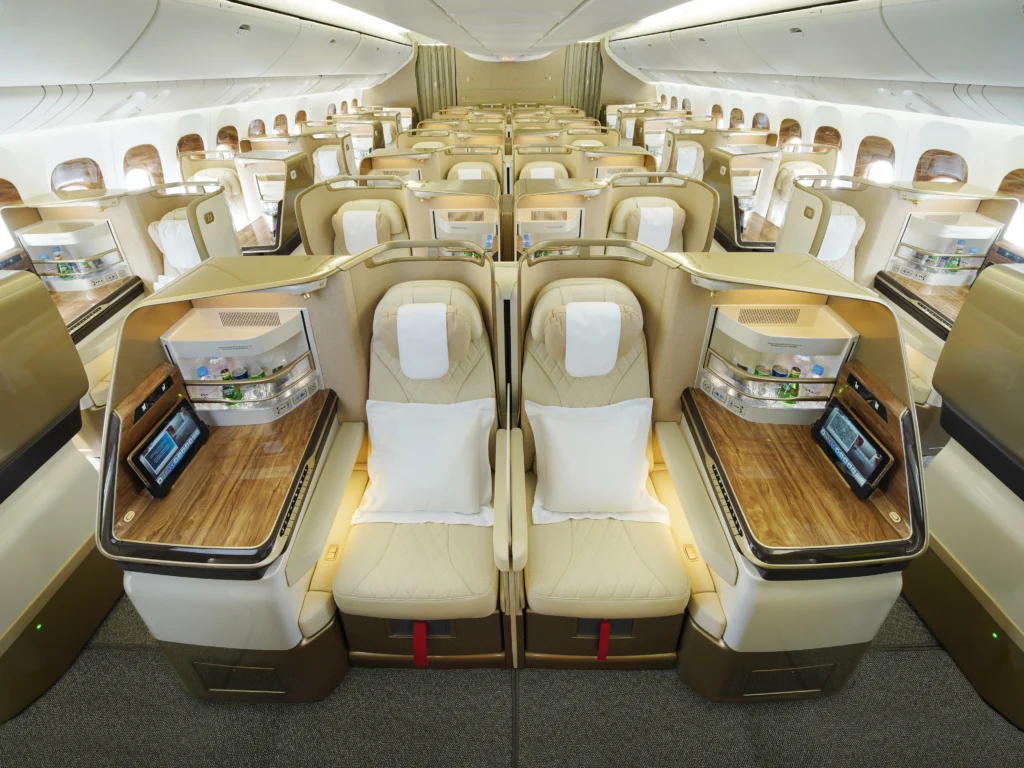
Emirates and Safran Seats have joined forces to establish a new manufacturing and assembly facility for aircraft seats in Dubai. This initiative aims to enhance local production capabilities in close proximity to Emirates operations.
The partnership will also facilitate retrofit projects at Dubai International Airport, positioning the city as a burgeoning aerospace center.
New Facility: A Strategic Milestone
The collaboration initially focuses on Business and Economy Class seats for retrofit projects, with plans to expand into line fit in the future.
This site will cater to both Emirates and other Safran Seats clients, providing the region with direct access to cutting-edge aircraft seating technology.
The goal is to boost industrial capabilities in response to the growing global demand for aircraft seats, utilizing modern production methods to enhance efficiency and foster the broader aviation supply chain in the UAE.
Supporting Dubai’s Aerospace Development Goals
Emirates leadership views this agreement as a crucial step in enhancing the local aerospace ecosystem.
The facility is expected to generate skilled jobs, support future cabin interior endeavors, and attract technology suppliers and experts. This venture aligns with Dubai’s long-term economic objectives and bolsters its aviation manufacturing sector.
Safran regards the new facility as an extension of its long-standing collaboration with Emirates, aimed at preparing for future production growth and advancing next-generation seat technology.
Safran has previously provided premium seating for Emirates’ cabin refurbishment and the airline’s new A350 fleet. This upcoming facility represents the first phase in a broader initiative to create a more extensive aerospace manufacturing cluster in Dubai.
Construction is scheduled for completion by Q4 2027 and will cover an area of 20,000 to 25,000 square meters. Production will ramp up gradually, with initial plans to assemble up to 1,000 Business Class seats annually, along with potential expansion built into the long-term strategy.
Emirates Plans $10-12 Billion Investment in DWC
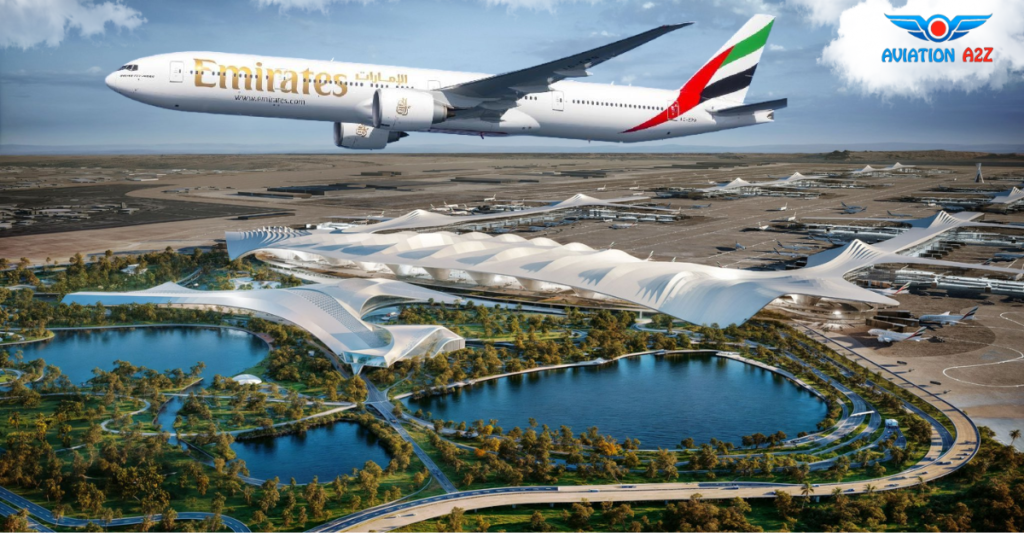
Emirates has announced its intention to invest between $10 to $12 billion in facilities at Al Maktoum International Airport (DWC). This investment is part of the airline’s strategy to contribute to the development of a new mega hub as part of Dubai’s long-range aviation vision.
The funds will assist in enhancing infrastructure at the new terminal site, which is part of a larger $35 billion expansion initiative already initiated by the Dubai government for DWC.
Infrastructure Needs Figured into Budget
Sheikh Ahmed bin Saeed Al Maktoum revealed that the airline’s budget will address key infrastructures, including catering facilities, maintenance hangars, and operational support structures. These projects are vital for accommodating future fleet expansion and service needs, separate from government financing for the terminals.
He pointed out that the airline’s investment represents a piece of a broader development framework. Various stakeholders are anticipated to join in as construction progresses, particularly as the airport braces for a capacity increase to 150 million passengers early in the coming decade, with scope to ultimately reach 260 million.
Recently, UK Export Finance issued a $3.5 billion Expression of Interest to back British companies participating in the expansion, signaling strong international confidence in the project during the Dubai Airshow 2025.
Commitment to Long-Term Capacity Planning by the Government
Dubai’s allocation of $35 billion for the new terminal aligns with its objective to establish Al Maktoum International Airport as the primary aviation center in the future. This planned capacity corresponds with predictions for passenger growth and broader economic targets in the aviation and tourism sectors.
Sheikh Ahmed stated that Emirates is well-positioned to fund its share of the development, describing the airline’s financial status as stable, buoyed by robust liquidity and consistent cash flows.
Collaboration Among Stakeholders in the Wider Aviation Initiative
The aviation ecosystem surrounding the new terminal encompasses contributions from numerous parties beyond Emirates. The CEO highlighted that additional governments are encouraging their companies to associate with the project, emphasizing its scale and global significance.
Wise investments will transform the airport into one of the world’s foremost aviation hubs, developed to meet long-term passenger and cargo demands.
What are your thoughts on Emirates’ strategic plans for the future of aviation technology?