Indian Airline Plans to Order Approximately 40 Embraer Aircraft

BENGALURU- Star Air (S5) is gearing up for a major order of Embraer aircraft, building on its steady growth in regional markets across India. The airline has made strides through the UDAN program and is now looking to strengthen its presence on a national scale.
The carrier plans to increase its fleet from 11 Embraer aircraft to around 50 fixed and rotary wing assets by 2030. This growth strategy is designed to enhance connections to underserved cities and improve accessibility to major hubs like Delhi Airport (DEL) and various state capitals.
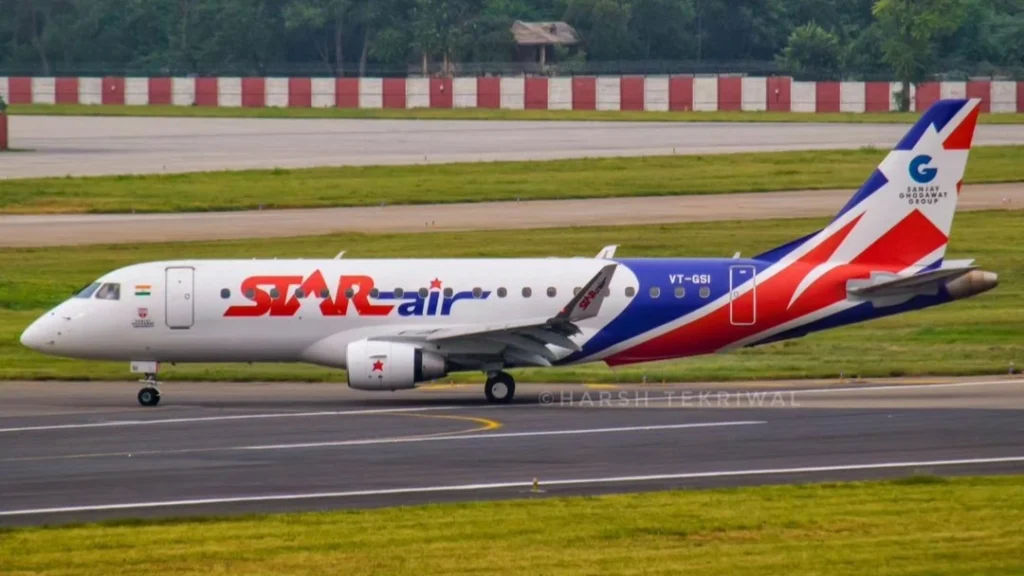
Star Air’s Embraer Expansion Plans
Star Air, which started its journey in 2019 with a single used Embraer jet, has steadily expanded its fleet through both purchases and leasing. Currently, the airline services 31 cities, many of which rely on the UDAN regional connectivity scheme (RCS).
Star Air operates 56 daily flights, with approximately two-thirds originating from UDAN routes. The annual support from UDAN amounts to between 200 and 250 crore, playing a crucial role in maintaining flights to areas with lower passenger traffic.
The management has articulated a clear pathway to reaching 20 aircraft by April 2028, enabling the airline to qualify for international flights.
Embraer has shown interest in establishing a local assembly line in India if it secures orders for around 200 aircraft from Indian entities. A potential order from Star Air could mark one of the first significant commitments from the nation, potentially encouraging further interest in Embraer’s regional offerings.
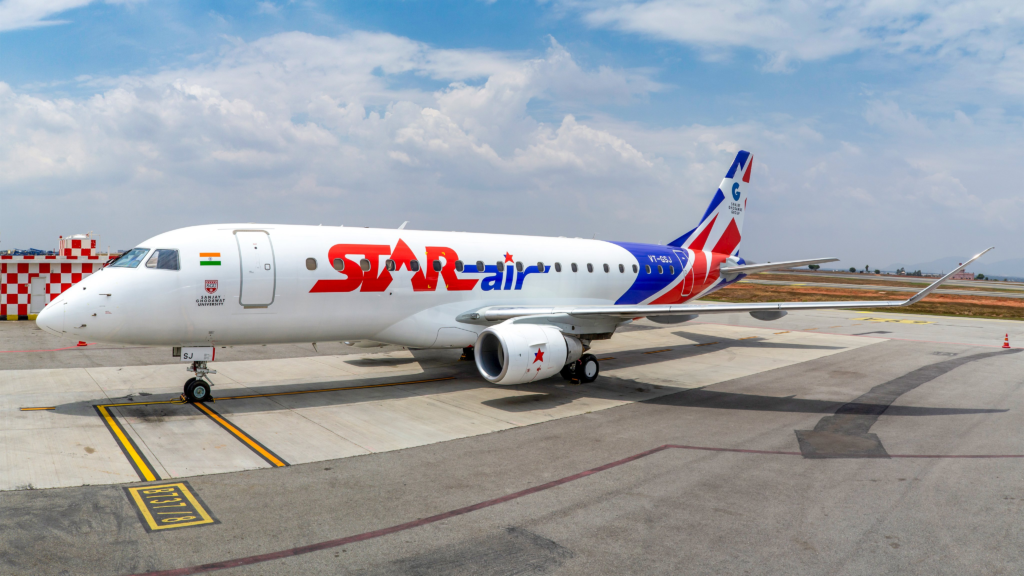
Operational Resilience and Financial Approaches
Star Air credits its ongoing growth to sound financial management and efficient operational strategies. The airline has successfully completed the initial phase of a 350 crore Series B capital raise, aimed at supporting future fleet expansion and infrastructure projects.
Part of the strategy involves developing in-house facilities for maintenance, repair, and training, which will help reduce costs and enhance technical oversight over their aircraft.
Notably, the airline’s proactive approach during the pandemic played a fundamental role in its stability. While the aviation industry faced major challenges, Star Air ensured that payments to lessors and staff were made on time. This commitment helped build trust with partners and investors, enabling the airline to continue expanding its fleet even during tough times.
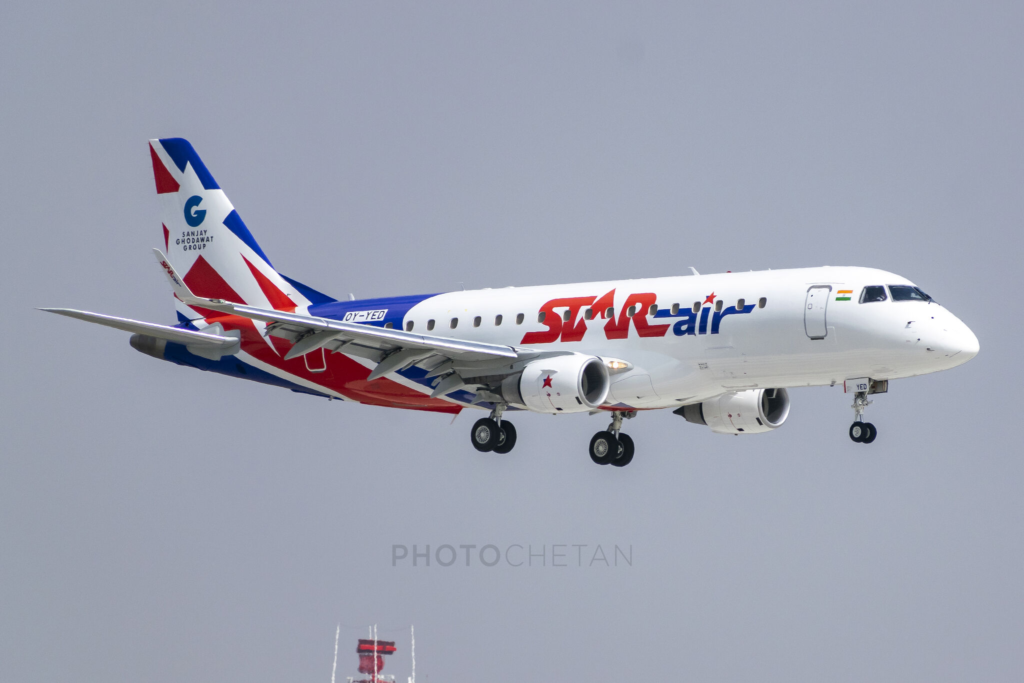
Path Forward to 2030
The airline anticipates adding two more aircraft within the current fiscal year, along with an additional five to six the following year. This projection will help bring the fleet closer to its medium-term goal of 20 operating aircraft.
Looking ahead, the long-term objective is to incrementally add eight to ten aircraft annually, including helicopters, aiming for a total fleet of around 50 by 2030.
This approach places emphasis on expanding connectivity to underserved Tier 2 and Tier 3 regions while improving regional air travel across India.
Are you excited to see how Star Air’s expansion will enhance regional connectivity in India?