
Porter Airlines’ 2025: Discover the 20 Busiest Domestic Routes

Porter Airlines’ Growing Domestic Network
Porter Airlines (PD) has swiftly increased its domestic operations since introducing the E195-E2 aircraft, demonstrating a clear expansion in its network. By June 2025, its 20 most frequented domestic routes reaffirm this growth, particularly emphasizing priority connections to and from Toronto Pearson (YYZ).
These popular routes are categorized based on monthly flights (round trips), total available seats, and available seat miles (ASMs). The rankings provide insight into Porter’s current domestic focus.
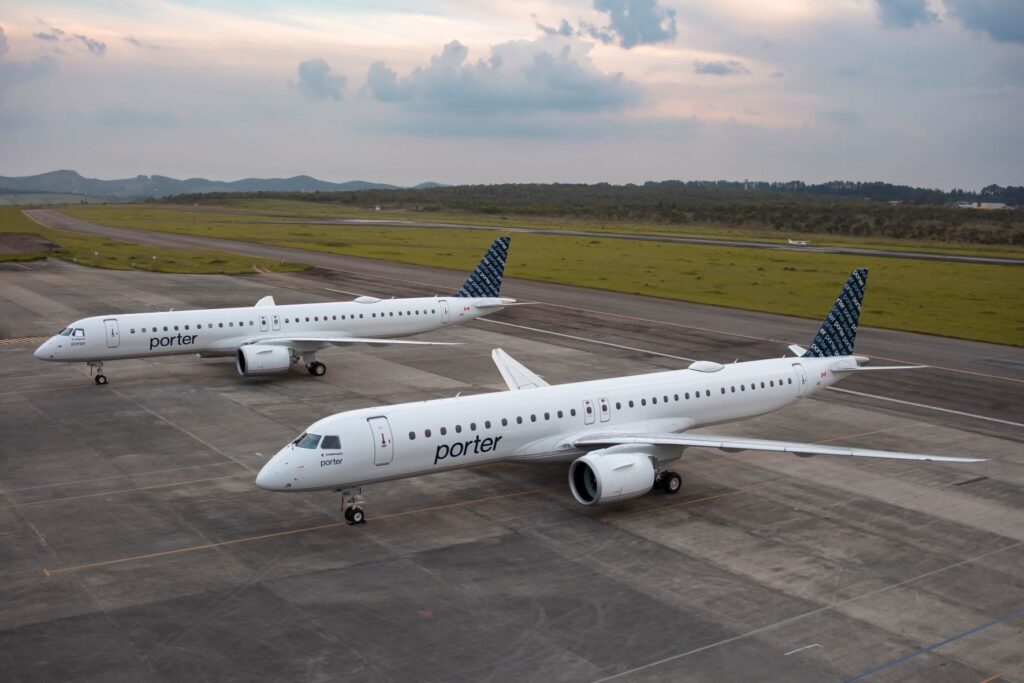
Toronto Pearson: The Heart of Operations
Toronto Pearson (YYZ) serves as the central hub for Porter, featuring on 14 of its 20 most traveled domestic routes. While some regional services continue from Billy Bishop Toronto City Airport (YTZ), operations from Pearson have shifted towards longer-haul destinations.
Routes such as Toronto–Vancouver, Toronto–Calgary, and Toronto–Halifax are now key highlights in Porter’s schedule. By utilizing larger jets, the airline positions itself as a strong competitor against Air Canada and WestJet on essential trunk routes.
Busiest Routes by Frequency
The most traveled route for Porter Airlines is Toronto–Vancouver, showcasing a remarkable **278 total flights in June 2025**. This link is vital for Porter, leading in all categories—flights, seats, and ASMs—illustrating the importance of Western Canada in its strategy.
Closely following are routes to Toronto–Halifax with 239 flights, Toronto–Montreal with 238, and Toronto–Ottawa with 233 monthly flights. These routes highlight a blend of long-haul and frequently scheduled short-haul services.
Toronto–Calgary and Toronto–Edmonton complete the top six, each with 232 flights. This reflects Porter’s commitment to enhancing frequency on crucial national routes.
Other routes with substantial flight numbers include:
- Edmonton–Ottawa: 120 flights
- Halifax–Ottawa: 120 flights
- Ottawa–Vancouver: 120 flights
- Ottawa–Calgary: 112 flights
These frequencies indicate the airline’s developing point-to-point hub model in Ottawa.
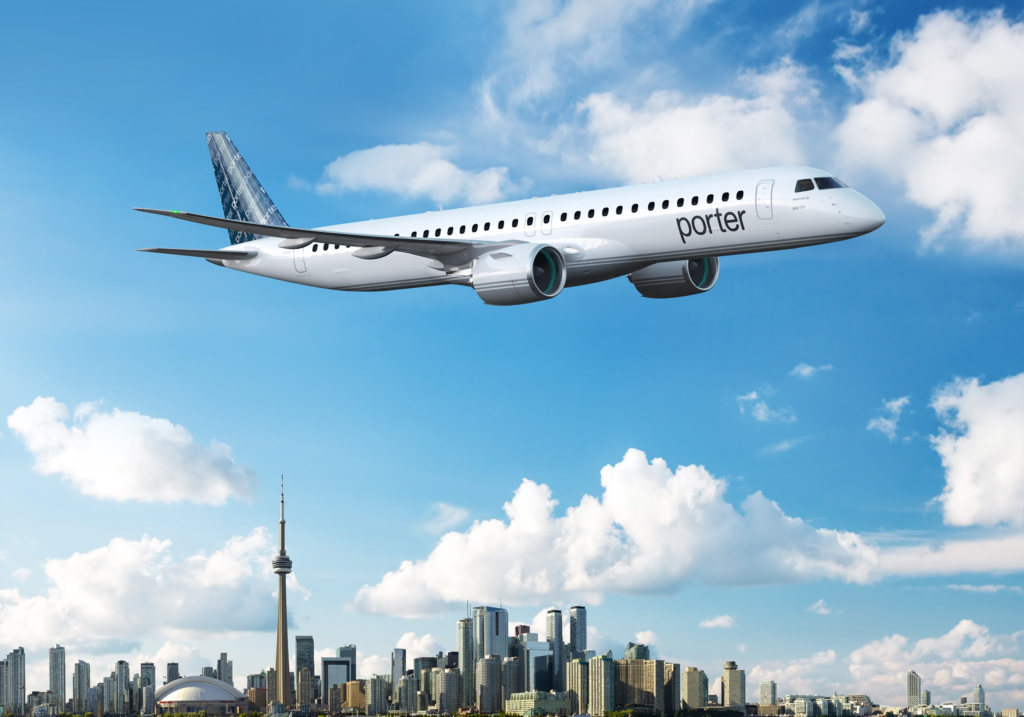
Busiest Routes by Seat Capacity
For the third consecutive month, Toronto–Vancouver leads with 36,696 available seats offered in June. This significant number, combined with high flight frequencies, illustrates Porter’s competitive stance against WestJet and Air Canada.
Following closely is Toronto–Halifax at 31,548 seats, with Toronto–Montreal not far behind at 31,416. The shorter sector of Toronto–Montreal reflects the strength in frequency and consistent daily utilization.
Toronto–Calgary and Toronto–Edmonton each feature 30,624 seats, reflecting high capacity utilization on nearly all flights.
Additional high-volume routes include:
- Edmonton–Ottawa: 15,840 seats
- Halifax–Ottawa: 15,840 seats
- Ottawa–Vancouver: 15,840 seats
- Ottawa–Calgary: 14,784 seats
- Winnipeg–Toronto: 14,652 seats
These routes feature prominently in supporting Porter’s hub strategy for Ottawa, providing viable connections throughout Eastern Canada and into Western regions.
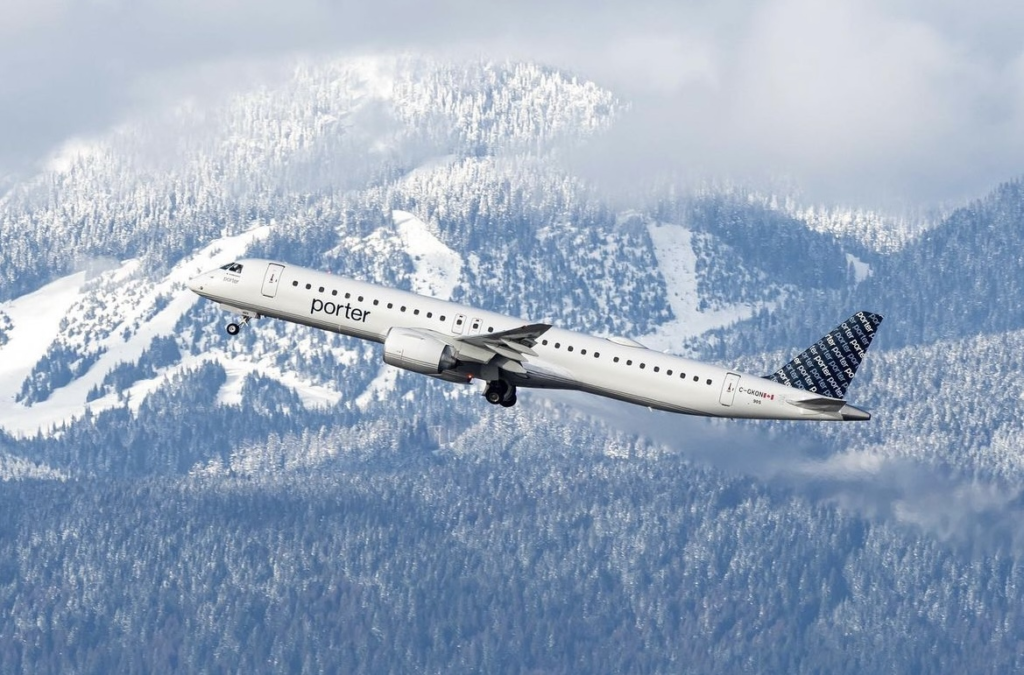
Busiest Routes by ASMs
Toronto–Vancouver leads in available seat miles with a remarkable 76.5 million in June. This consistent performance underscores the route’s significance stemming from its high flight volume and distance.
Toronto–Calgary and Toronto–Edmonton are in second place, both with 51.3 million ASMs. Ottawa–Vancouver follows with 35.1 million, while Victoria–Toronto achieves 27.1 million. These figures highlight Porter’s strategy in long-haul markets utilizing its new E195-E2 aircraft.
Toronto–Halifax, despite its shorter distance, operates a high number of flights but records lower ASMs at 25.3 million. The Montreal–Vancouver route, with only 66 flights, still approaches 20 million ASMs due to its length and heavy seating deployment.
Notable high-ASM routes include:
- Ottawa–Calgary: 26.5 million
- Montreal–Calgary: 14.8 million
- St. Johns–Toronto: 11.8 million
These metrics illustrate Porter’s commitment to enhancing intercontinental and interprovincial connections throughout its original Eastern Canadian base.
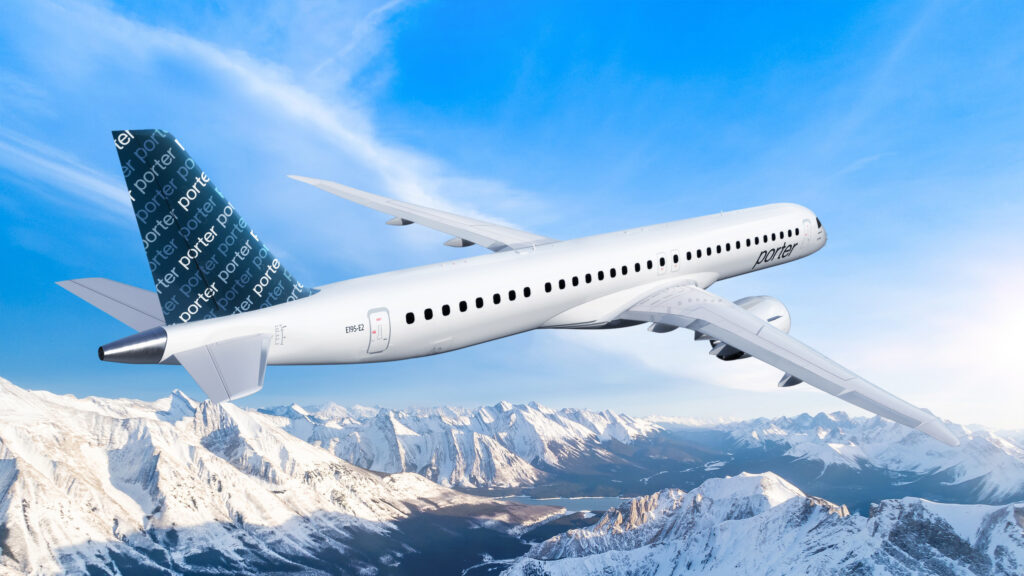
Strategic Route Development
Porter Airlines’ busiest routes in June illustrate a substantial transformation from a regional carrier to a full-service national competitor. The airline now enables direct connections between Eastern cities such as Ottawa, Montreal, and Halifax to the western provinces, a significant shift from its previous operations.
Though it historically thrived in the Ontario–Quebec corridor, its new routes like Ottawa–Vancouver and Edmonton–Ottawa signify a broader range of services. Porter’s dual-hub model, with Toronto Pearson as the main hub and Ottawa functioning as a secondary base, enables diverse nonstop routes.
Utilization of the E195-E2 aircraft also enhances seat-mile efficiency, making routes like Victoria–Toronto and Hamilton–Vancouver viable, despite lower frequency.
| Rank | Route | Flights | Seats | ASMs |
| 1 | Vancouver (YVR) – Toronto (YYZ) | 278 | 36696 | 76511160 |
| 2 | Halifax (YHZ) – Toronto (YYZ) | 239 | 31548 | 25301496 |
| 3 | Montreal-Trudeau (YUL) – Toronto (YYZ) | 238 | 31416 | 9896040 |
| 4 | Ottawa (YOW) – Toronto (YYZ) | 233 | 30756 | 6950856 |
| 5 | Calgary (YYC) – Toronto (YYZ) | 232 | 30624 | 51325824 |
| 6 | Edmonton (YEG) – Toronto (YYZ) | 232 | 30624 | 51325824 |
| 7 | Edmonton (YEG) – Ottawa (YOW) | 120 | 15840 | 28131840 |
| 8 | Halifax (YHZ) – Ottawa (YOW) | 120 | 15840 | 9424800 |
| 9 | Ottawa (YOW) – Vancouver (YVR) | 120 | 15840 | 35069760 |
| 10 | Ottawa (YOW) – Calgary (YYC) | 112 | 14784 | 26522496 |
| 11 | Winnipeg (YWG) – Toronto (YYZ) | 111 | 14652 | 13714272 |
| 12 | Victoria (YYJ) – Toronto (YYZ) | 98 | 12936 | 27165600 |
| 13 | St. Johns (YYT) – Toronto (YYZ) | 68 | 8976 | 11875248 |
| 14 | Montreal-Trudeau (YUL) – Vancouver (YVR) | 66 | 8712 | 19994040 |
| 15 | Hamilton (YHM) – Vancouver (YVR) | 61 | 8052 | 16804524 |
| 16 | Montreal-Trudeau (YUL) – Calgary (YYC) | 60 | 7920 | 14834160 |
| 17 | Halifax (YHZ) – Montreal-Trudeau (YUL) | 60 | 7920 | 3967920 |
| 18 | Ottawa (YOW) – St. Johns (YYT) | 60 | 7920 | 8719920 |
| 19 | Ottawa (YOW) – Winnipeg (YWG) | 60 | 7920 | 8331840 |
| 20 | Saskatoon (YXE) – Toronto (YYZ) | 60 | 7920 | 10897920 |
The Takeaway
The data on Porter Airlines’ busiest domestic routes in June 2025 illustrates a notable evolution in its network design. While Toronto Pearson continues to play a pivotal role, Ottawa and Halifax also emerge as significant centers in the expanding scheme.
Porter’s transcontinental connections now stand in direct competition with traditional airlines in terms of both capacity and frequency. With its new fleet and wider network, Porter is poised for a strong presence in Canada’s domestic air travel market.
What do you think about Porter Airlines’ expansion strategy? Are there any routes you’re excited to see in the future?
Similar Posts

Tata and Airbus Target C295 Exports from India
Airbus and Tata Group have launched India’s first private aircraft manufacturing ecosystem focused on the C295 program, marking a significant advancement in the aerospace sector. The Indian Air Force will receive domestically assembled C295 aircraft starting in 2026, enhancing defense capabilities and opening export opportunities. This collaboration involves manufacturing 56 C295 aircraft and establishing Airbus’s first complete production line outside Europe. The initiative will create a comprehensive manufacturing ecosystem across India, with components sourced from various locations. Additionally, discussions are underway for a passenger variant to support regional operations, further expanding the C295’s versatility.
Riyadh Air Selects Inflight Wi-Fi Partner for Airbus A321neo Aircraft
Riyadh Air has tapped Neo Space Group (NSG) as its inflight…
American Airlines Innovates with AI Travel Search Tool for Easy Flight Booking
American Airlines’ Innovative AI-Powered Booking Tool FORT WORTH- American Airlines (AA)…

Hawaiian Airlines Flight to Tokyo Declares Emergency Due to Fire
A Hawaiian Airlines flight from Honolulu to Tokyo faced a mid-air emergency when a passenger’s cell phone caught fire due to a lithium-ion battery issue at 40,000 feet. Passengers reported a burning smell, prompting flight attendants to secure the device in a fire containment bag. The pilots declared an emergency and landed safely at Tokyo Haneda Airport with no injuries. This incident raises concerns about lithium-ion battery safety in aviation, leading airlines to tighten regulations and enhance safety protocols. As battery-related incidents increase, addressing these risks remains vital for ensuring passenger safety.

easyJet Launches New Bases in Rome and Milan After Deal
EasyJet plans to expand its Italian operations by establishing new bases in Milan and Rome by early 2025, capitalizing on the European Commission’s approval of Lufthansa’s acquisition of ITA Airways. The airline will station five aircraft at Milan-Linate Airport and three at Rome-Fiumicino Airport, creating approximately 300 jobs. This expansion allows easyJet to operate from 20 Italian airports, serving over 20 million customers annually. The airline aims to enhance competition and provide more affordable travel options while continuing to prioritize Milan-Malpensa Airport. EasyJet’s growth strategy underscores its commitment to democratizing air travel in Italy.
Global Airlines Project $41 Billion Profit with Stable Margins Through 2026
502 Bad Gateway See also South Korean Airlines Surpass Japanese Rivals…