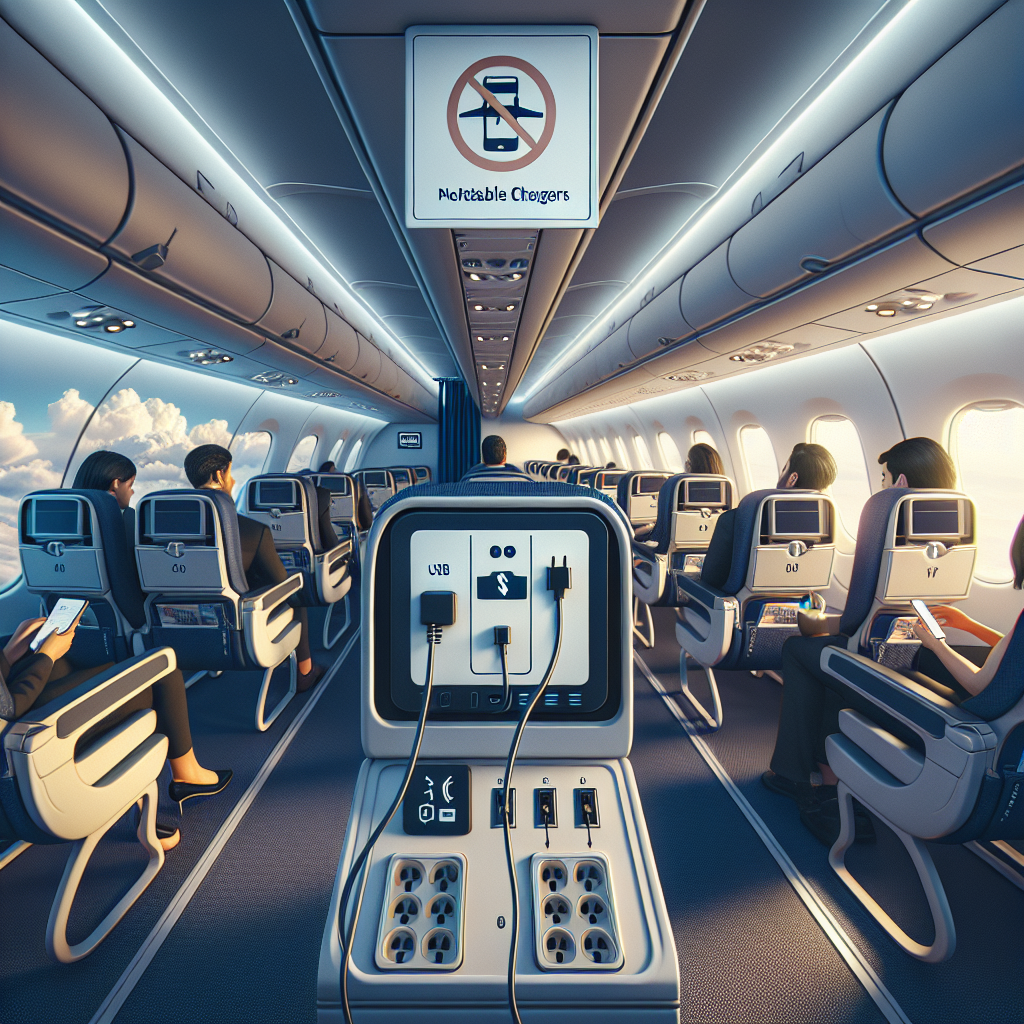
EVA Air Prohibits Portable Chargers Amid Fire Safety Concerns

EVA Air Prohibits Use of Portable Chargers on All Flights Starting March 1, 2025
In a significant move to enhance inflight safety, Taiwanese airline EVA Air has announced that it will ban the use of portable chargers on all its flights effective March 1, 2025. This decision comes amid growing concerns over the fire risks associated with lithium-ion batteries, particularly incidents of thermal runaway, where devices overheat and potentially ignite.
EVA Air currently restricts the stowage of portable chargers and lithium batteries in checked luggage, requiring passengers to carry them in their carry-on bags. However, following a recent fire incident involving Air Busan, where an A321 caught fire on the ground due to suspected thermal runaway, EVA Air aims to improve safety by prohibiting the use of these devices entirely on board.
Safety Measures and Recommendations
EVA Air advises passengers to fully charge their electronic devices before boarding and to make use of the AC and USB charging outlets available at their seats. This precaution is part of a broader initiative to mitigate risks associated with lithium-ion batteries, which have been linked to several inflight incidents.
- Key Points:
- Effective March 1, 2025, no portable chargers will be allowed on EVA Air flights.
- Passengers are encouraged to charge devices before boarding.
- AC and USB charging outlets will be accessible at each seat.
Industry Response and Regulations
EVA Air is not alone in this initiative. China Airlines, another major Taiwanese carrier, has followed suit by advising passengers against using portable chargers in-flight. They require these devices to be carried on, prohibiting them from checked baggage for safety reasons. Similarly, Mandarin Airlines, a subsidiary of China Airlines, has implemented the same regulations. Starlux Airlines, which has not permitted portable chargers since its inception in 2018, reinforces the trend of increased scrutiny on these devices.
The concerns regarding portable chargers are not new. The dangers of lithium-ion batteries were highlighted following a tragic incident involving a United Parcel Service (UPS) Boeing 747 in 2010, where a fire started from a container of lithium-ion batteries, leading to the aircraft’s crash.
Recent Incidents Raise Alarm
The recent fire on January 28, 2024, involving an Air Busan flight at Busan-Gimhae International Airport, has further intensified scrutiny of portable chargers. Although all passengers were evacuated safely, the incident underscored the need for stringent regulations. Investigations suggest that the fire may have originated from a bag containing a lithium-ion battery.
Global Trends in Air Travel Safety
In Europe, airlines are also reevaluating their policies regarding portable chargers. For instance, Ryanair has begun informing passengers that the use of portable chargers is no longer permitted on their flights. This reflects a growing consensus among airlines worldwide to prioritize passenger safety amid rising concerns about lithium-ion battery-related incidents.
For more details on airline safety regulations, you can visit the Federal Aviation Administration (FAA) or check out the European Union Aviation Safety Agency (EASA).
Conclusion
As airlines across the globe adapt to safety challenges posed by portable chargers, EVA Air’s decision to prohibit their use marks a crucial step in ensuring passenger safety. We encourage readers to share their thoughts on this new policy and to explore related articles on air travel safety measures. Stay informed, and safe travels!