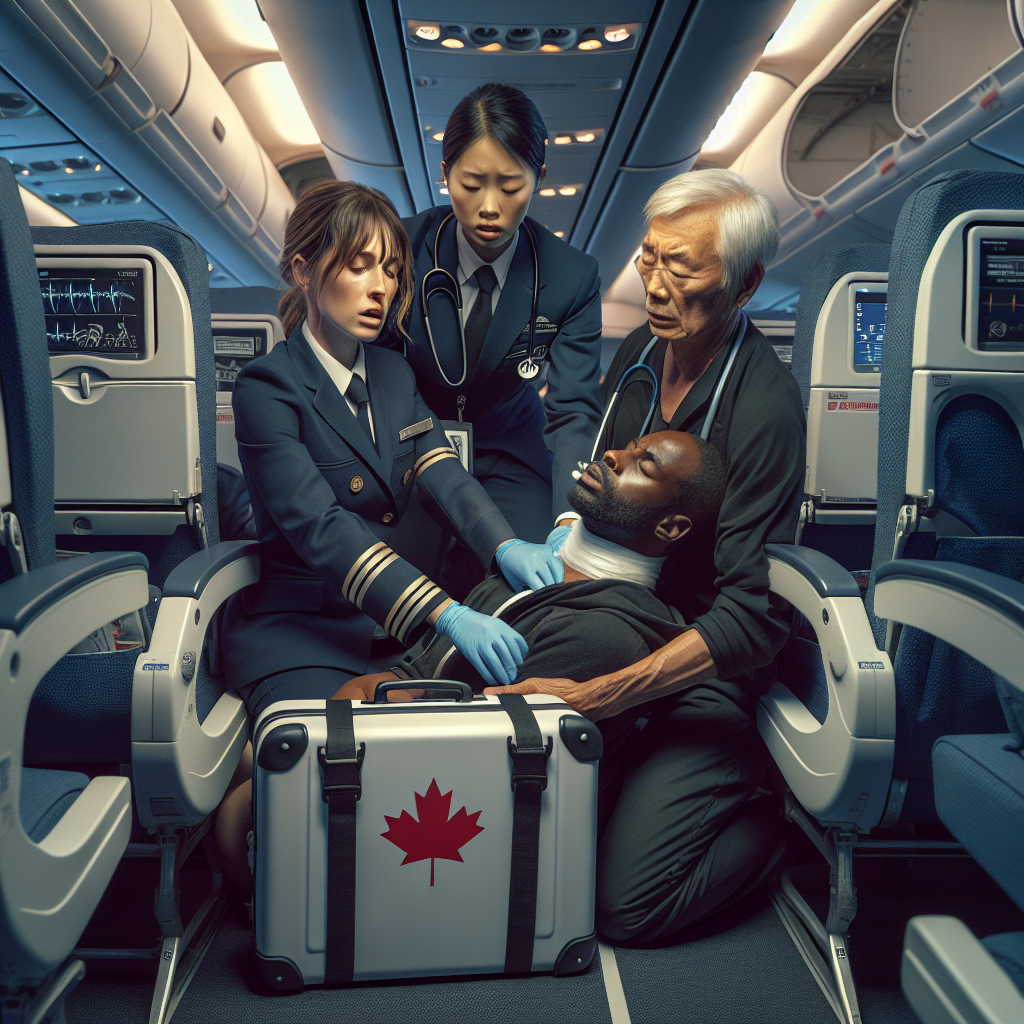
Air Canada Passenger Falls Ill from Food Poisoning on Flight

Dramatic In-Flight Medical Emergency: Air Canada Passenger Suffers Food Poisoning
MONTREAL – Air Canada flight AC861, traveling from London Heathrow (LHR) to Vancouver International Airport (YVR), encountered a serious medical emergency when a passenger experienced severe food poisoning mid-flight. This alarming incident underscores the importance of medical support on commercial flights and the pivotal role off-duty medical professionals can play in such situations.
The affected passenger required immediate medical attention, including IV fluids, anti-nausea medication, and morphine, all thanks to the quick intervention of an off-duty doctor, identified as Dr. Adam. This dramatic story has quickly gained traction on social media platforms, particularly Reddit, emphasizing the critical need for trained medical personnel aboard flights.
Air Canada Passenger Food Poisoning Incident
What began as a routine flight turned into a harrowing experience for one traveler. Approximately three and a half hours into the journey, the man was suddenly afflicted with severe food poisoning symptoms, including vomiting, diarrhea, and excruciating pain. Isolated in economy class, he described the ordeal as one of the most frightening moments of his life.
Flight attendants promptly responded to the situation by paging for medical assistance over the intercom. Fortunately, Dr. Adam, a passenger with medical expertise, answered the call without hesitation. His calm demeanor and swift actions were crucial in stabilizing the situation.
Dr. Adam utilized the plane’s emergency medical kit to administer IV fluids and anti-nausea medications. As the passenger’s pain intensified, the doctor resorted to morphine, an opioid reserved for licensed professionals, to alleviate the suffering. At one point, the passenger began to shake uncontrollably, highlighting the severity of his condition.
In a remarkable act of kindness, Dr. Adam relinquished his Business Class seat, allowing the ill passenger to lie flat and regain some comfort during the flight. This decision proved vital, as the medications began to take effect, successfully stabilizing the man before the plane landed in Vancouver.
The Importance of Medical Support Onboard Flights
The incident aboard Air Canada illustrates that airlines, including Air Canada, cannot predict whether a trained medical professional will be on any given flight. In emergencies, off-duty doctors, nurses, or paramedics can often provide essential assistance, although they are never obligated to do so.
Airline policies typically offer liability protections for any medical interventions performed by passengers with medical training. Commercial aircraft are equipped with comprehensive medical kits containing medications and tools that licensed professionals can utilize. These kits include opioids like morphine, anti-nausea agents, and IV fluids, all used during this incident.
In addition, cabin crew members maintain communication with ground-based emergency medical teams via satellite. This real-time support assists in making informed decisions about whether the flight should continue its route or divert based on the passenger’s condition.
Conclusion: The Bottom Line
The Air Canada cabin crew effectively managed the emergency, demonstrating composure and efficiency throughout the ordeal. This incident highlights the critical importance of in-flight training, proper medical equipment, and the collaborative efforts between the flight crew and passengers.
While such medical emergencies are rare, they remind travelers of the vulnerability faced at cruising altitude and the necessity for rapid access to professional medical care, even when it arises by chance.
For more insights into travel safety and emergency protocols, check out related articles on airport safety and in-flight health guidelines. We welcome your thoughts and experiences—share them in the comments below!