Delta Air Lines Shuts Down Austin Route: What You Need to Know

ATLANTA– Delta Air Lines (DL) has announced that it will cease all operations to Midland International Air & Space Port (MAF), with the Austin (AUS)–Midland (MAF) route set to end on November 8.
This decision effectively removes Delta’s footprint in Midland, Texas, following prior reductions in service to Harlingen (HRL). This shift underscores the airline’s evolving strategy at Austin-Bergstrom International Airport (AUS).
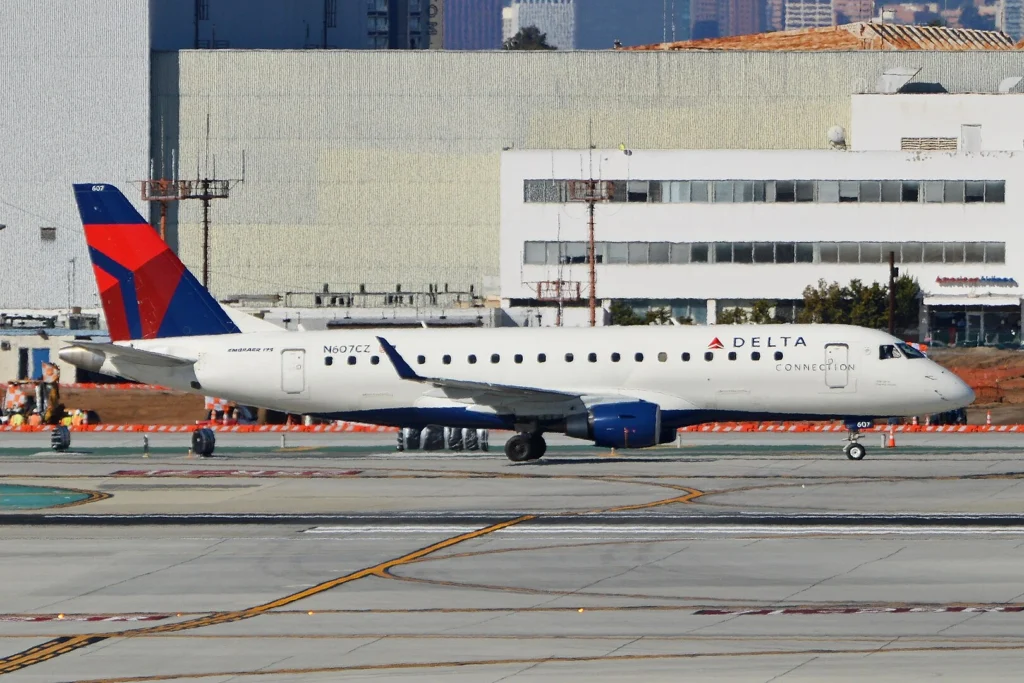
Delta Terminates Austin to Midland Service
Delta Air Lines introduced flights connecting Austin (AUS) and Midland (MAF) in 2023. However, many industry analysts questioned this tactic since Midland was not linked to Delta’s main hub in Atlanta (ATL), but rather operated as a regional route.
The service utilized regional jets, keeping costs relatively low. Unfortunately, performance metrics consistently fell short. Delta’s marketing efforts for the route were minimal, providing Midland with only 48 hours’ notice before announcing the launch publicly. This indicated that the primary aim was to secure gate access in Austin rather than develop a stable market.
By early 2024, data indicated ongoing challenges, with passenger demand from Austin to Midland remaining low. The average fare plunged from approximately $505 round-trip in March 2024 to $336 by March 2025.
Even at reduced ticket prices, Delta struggled to gain traction against Southwest Airlines (WN), which retained dominance at both airports, as noted in reports.
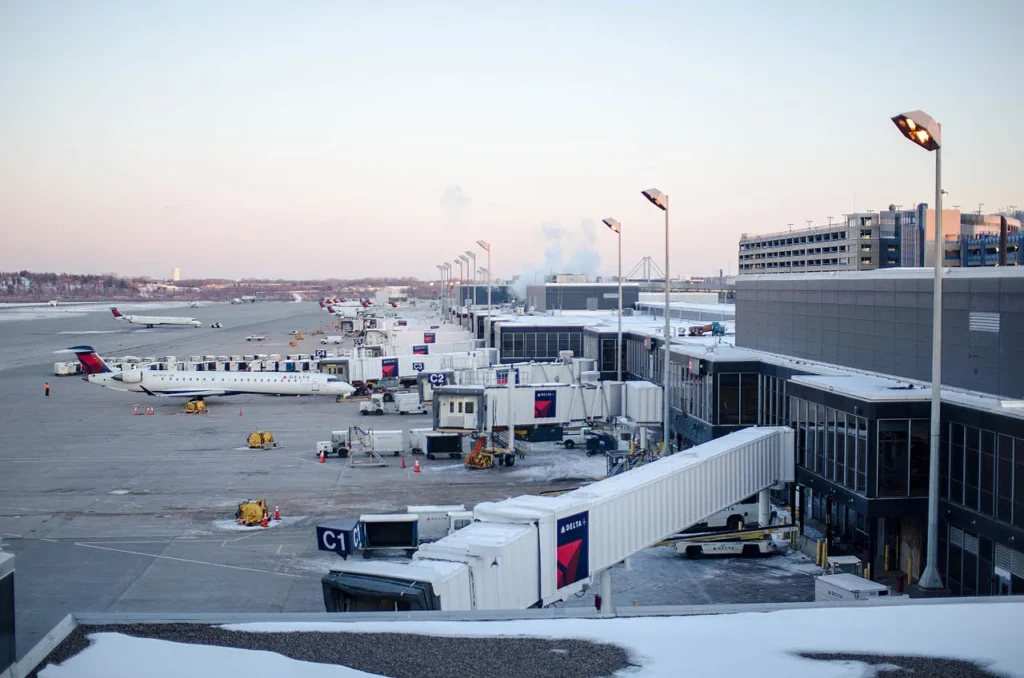
Austin Gate Strategy Changes
The discontinuation of the Midland route aligns with Delta’s overall strategy at Austin-Bergstrom (AUS). The airline has progressively increased its presence in Austin, claiming nearly 30 routes in announcements, though the actual count has varied as less profitable flights have been quietly removed.
Analysts have pointed out that certain short-haul routes in Texas acted merely as placeholders. Operating smaller, low-demand flights allowed Delta to maintain access to limited gate space while planning longer-term growth.
As more critical routes were finalized, lesser-performing connections like Austin–Midland (MAF) and Austin–Harlingen (HRL) were eliminated.
This strategy reflects the competitive landscape at AUS, where both Southwest (WN) and American Airlines (AA) have substantial operations, forcing Delta to find competitive space.
Key Metrics Informing the Exit
Traffic and market share statistics clarify why Delta chose to discontinue the Midland service:
- Traffic Volume: By March 2025, the Austin–Midland route managed about 86 passengers daily each way (PDEW), a slight rise from 40 PDEW in March 2024.
- Yields: Average round-trip fares dropped from $505 in 2024 to $336 in 2025, compromising profitability.
- Market Share: Southwest (WN) captured a majority, accounting for 56% of passengers in 2025, compared to Delta’s 39%. American (AA) and United (UA) remained minor players in this space.
- Capacity: Daily flights on this route reduced from an average of 3.7 in September 2025 to 2.5 by December 2025, indicating a decreasing commitment.
These indicators highlight that Delta’s gradual growth was insufficient to justify maintaining the service, leaving Southwest as the predominant carrier at both AUS and MAF.
Looking Ahead
With Delta’s withdrawal, the airline now has no presence in Midland (MAF). The lone remaining smaller Texas market for Delta is McAllen (MFE), which could also face challenges due to similar performance issues.
For travelers in Midland, this departure restricts options primarily to Southwest Airlines (WN) and limited services from American (AA) and United (UA).
For Austin, it indicates Delta will prioritize larger and more lucrative markets, using shorter regional routes as temporary placeholders rather than as long-term commitments.
Although Delta hasn’t elaborated on this proposal, the trend is evident: routes misaligned with its growth narrative in Austin are unlikely to endure.
What are your thoughts on Delta’s strategy at Austin-Bergstrom Airport?