Southwest Introduces Anti-Terrorism Cockpit Barricades on New 737 MAX

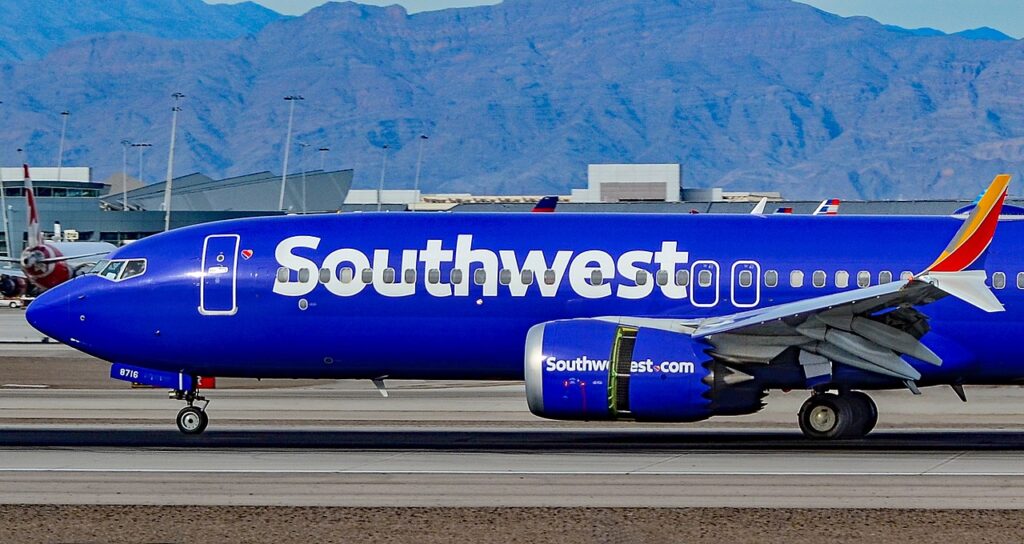
DALLAS- Southwest Airlines (WN) has made history by becoming the first airline in the United States to implement anti-terrorism cockpit barricades on its newly received Boeing 737 MAX jets that have arrived from Seattle (SEA).
While many carriers have chosen to postpone this enhancement until it becomes mandatory, Southwest Airlines has opted for immediate activation of the anti-terror cockpit barricade system on its latest aircraft.
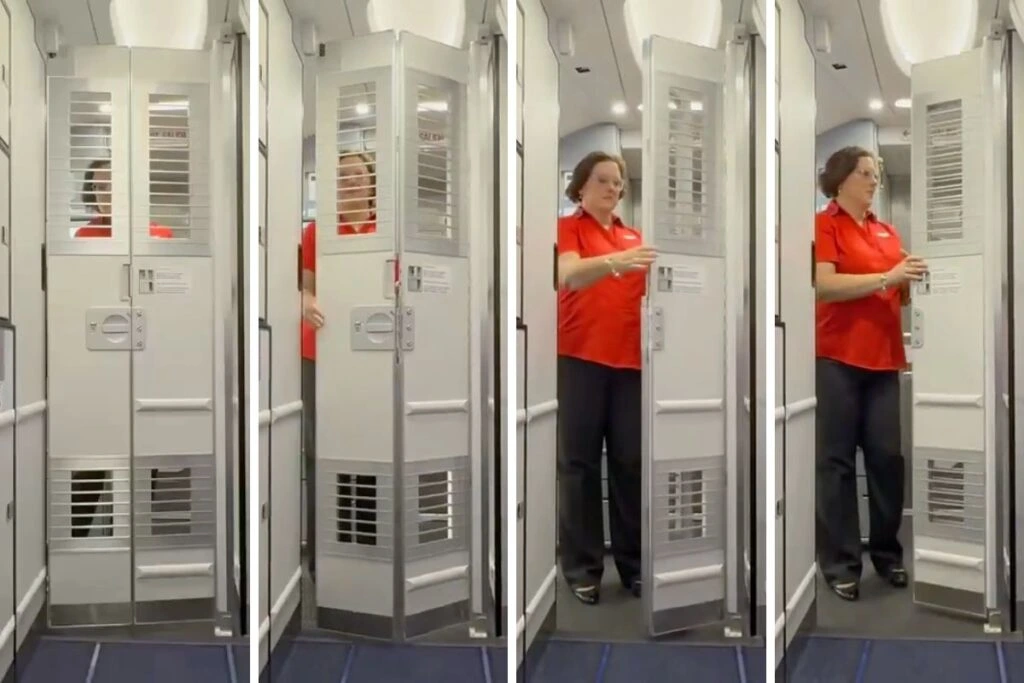
Southwest’s Anti-Terrorist Barricades
This innovative safety mechanism is referred to as the Installed Physical Secondary Barrier (IPSB). It is strategically placed between the forward galley and the main cockpit door.
The barrier is activated whenever the cockpit door is open, which could occur when pilots leave to use the lavatory during flight.
Previously, airlines relied on beverage carts to temporarily block access during these brief periods. In contrast, the IPSB provides a more dependable layer of security. While it isn’t bulletproof, its lightweight design is intended to slow intruders long enough to protect the cockpit.
As reported by PYOK, the IPSB signifies an extra layer of security that has been in discussion since the events of September 11.
Legislative Background and FAA Mandate
The concept of secondary cockpit barriers gained traction after the events of 9/11. However, airlines were hesitant to adopt this measure voluntarily, pointing instead to costs and logistical issues.
In 2018, the FAA Authorization Act made it mandatory for all newly manufactured commercial aircraft for U.S. airlines to feature IPSBs.
Although this legislation was enacted, progress has been sluggish. It wasn’t until 2023 that the FAA released the final requirements for implementing IPSBs on all new aircraft within a two-year window. Due to pressure from the industry, the FAA has since pushed the deadline to July 2026 due to training complications.
What Sets Southwest Airlines Apart
While most U.S. airlines plan to wait until the deadline in 2026 to implement IPSBs, they cite the lack of training materials and delays in FAA certification as reasons for this delay.
On the other hand, Southwest Airlines has demonstrated a proactive approach by rolling out the barriers without hesitation, showcasing its commitment to aviation safety.
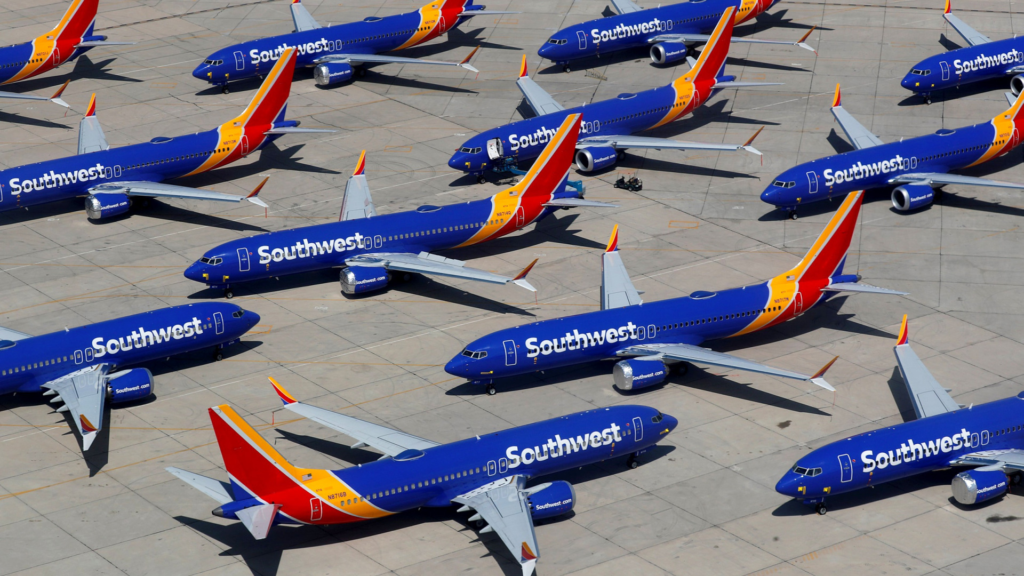
By the close of 2026, Southwest aims to welcome 25 new aircraft equipped with IPSBs. This adds up to just 3% of its overall fleet, indicating that the majority will still await retrofitting as older jets are phased out.
The IPSB design utilized by Southwest features a bi-fold mechanism that sits between the galley and cockpit door. Other designs have been approved, some of which create a sealed “airlock” area between the cockpit and restroom.
Despite receiving FAA approval, aviation unions remain dissatisfied with the delay, particularly the Air Line Pilots Association (ALPA), which has voiced concerns that postponing IPSB deployment could jeopardize security.
Airlines for America, the leading industry lobbying group, initially sought a two-year delay but saw the FAA limit it to just one year.
Final Thoughts
In a significant move for aviation safety, Southwest Airlines has distinguished itself as the first U.S. airline to utilize IPSBs on its newly delivered Boeing 737 MAX aircraft.
While other airlines will hold off until 2026, Southwest’s prompt deployment reflects a robust commitment to protecting cockpit security. How do you feel about this proactive approach to aviation safety?