Explore Singapore Airlines’ 2025 Busiest Routes Worldwide

Singapore Airlines (SQ) is dynamically reshaping its worldwide network as air travel demand picks up across Singapore and key international hubs. The airline has successfully restored a majority of its pre-pandemic flight frequencies, with passenger departures reaching 95 percent and seat capacity climbing to 97 percent of previous operations, including those from SilkAir.
Destinations such as Jakarta, Bangkok, London, and Manila are witnessing a surge in demand, while places like Hong Kong and Kuala Lumpur are still on the path to full recovery.
Singapore Airlines’ Busiest Routes in 2025
Singapore Airlines is experiencing robust performance on routes catering to both business and leisure travelers. Jakarta leads with the highest one-way weekly seat count, totaling 16,247 seats.
Despite the return of flight frequencies, overall capacity remains about 7 percent lower than in 2019, due to the retirement of higher-capacity Boeing 777-300 aircraft. Bangkok and Tokyo follow closely, with both destinations matching or even exceeding pre-COVID capacities, driven by steady demand from regional business travelers and tourism.
London has seen one of the biggest percentage increases among long-haul destinations, with seat capacity now 20 percent higher than 2019 levels. This is aided by the 2024 launch of an additional daily service at Gatwick Airport, which transitioned to daily flights earlier this year.
Strong growth has also been recorded for Manila, Hong Kong, and Bali, attributed to the introduction of larger aircraft and optimized network strategies. Conversely, Kuala Lumpur, once ranking in the top three for Singapore Airlines, is still 9 percent below its 2019 seat capacity, despite a narrowed frequency gap compared to last year.
Sydney reflects a similar situation, with 14 percent less capacity than pre-pandemic levels due to a reduction in daily flights from five to four.
Analysis of SQ’s Weekly Flights
A look at flight frequency shows varying dynamics, as smaller aircraft have been deployed on certain regional routes. Jakarta remains the busiest city pair, offering 63 weekly flights.
Kuala Lumpur holds the second spot with 54 weekly services, though there is still a noticeable gap in seat count compared to 2019 levels.
Bangkok, Bali, Phuket, and Tokyo are also marked by high frequencies, mirroring strong interest in both leisure and corporate travel options.
London, Hong Kong, and Melbourne each operate 35 weekly flights, while Manila and Penang also rank within the top fifteen, owing to expanded use of narrow-body aircraft on select short-haul routes.
Finalizing the top group are Sydney, Perth, Seoul, and Brisbane, each logging 28 weekly flights. While these services connect key regions of Oceania and Northeast Asia, the recovery trends vary significantly, influenced by market competition.
Notably, Hong Kong has experienced a drastic fall in its flight ranking. Once a top contender by seat capacity and frequency, it now sits ninth in both categories, impacted by lower demand, particularly due to lingering travel restrictions and reduced corporate travel.
Business Class Capacity
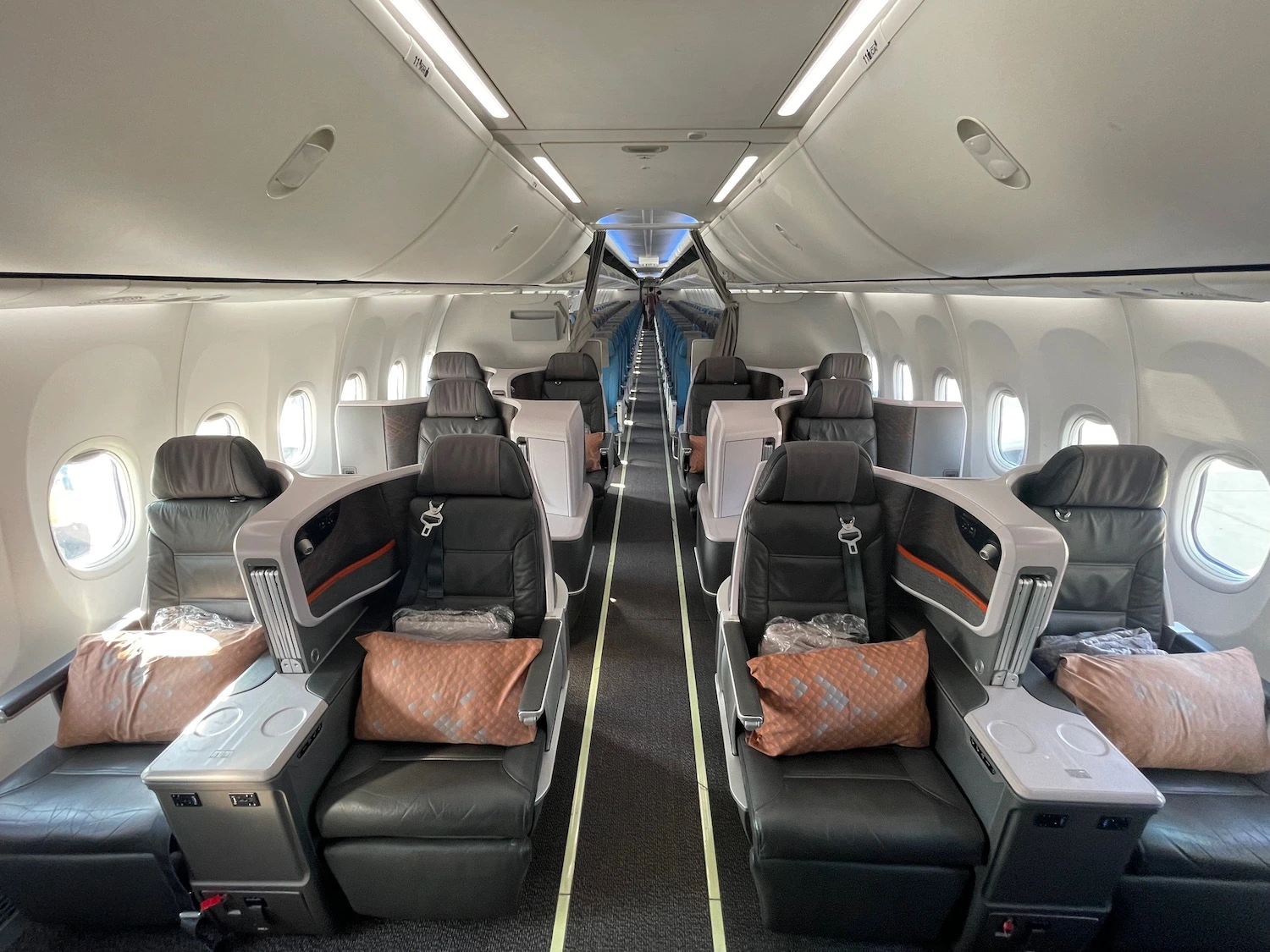
Insights into Business Class rankings highlight important premium travel trends across the network. Jakarta leads in this area with 2,814 Business Class seats, bolstered by strong corporate demand.
London follows closely, enjoying a 26 percent increase in Business Class capacity compared to 2019, thanks to the added Gatwick route. Sydney, Tokyo, and Bangkok round out the top five, showing consistent demand for premium seating.
Conversely, Hong Kong’s Business Class capacity has decreased significantly, showing a 39 percent drop from pre-COVID levels due to the continued use of smaller aircraft on this route.
New York, on the other hand, exhibits one of the highest growth percentages, with Business Class seating up 43 percent due to increased frequencies and long-haul demand. Bali, Shanghai, and Manila also reflect higher Business Class availability compared to before the pandemic.
However, Tokyo indicates a noteworthy decline, as Business Class capacity is still down 18 percent compared to 2019. This is largely due to the transition from larger aircraft like the Airbus A380 and Boeing 777-300 to the smaller Boeing 787-10.
The 787-10’s reduced Business Class cabin size impacts premium availability, despite a full recovery of flight frequencies.
These shifts illustrate how Singapore Airlines is adjusting its offerings based on demand patterns and operational practicality while striving to remain competitive in crucial markets.
Final Thoughts
Singapore Airlines has made significant strides in rebuilding its global network, although recovery varies widely across different routes. Jakarta remains the leading market by seat capacity and frequency, while Bangkok, Bali, and London showcase meaningful growth driven by additional flights and larger aircraft.
Conversely, Hong Kong continues to struggle with slower recovery factors in demand. Business Class trends reveal notable changes, with strong performances noted on routes like London and New York, while Tokyo and Hong Kong experience setbacks.
As the airline adapts to changing demand trends, it is likely that we’ll see further shifts in route rankings in the near future.
What are your thoughts on the evolving landscape of air travel and the recovery of major airlines?