Korean Air and Asiana Unite: A New Era of Streamlined Interiors

SEOUL- Passengers flying with Asiana Airlines (OZ) will soon enjoy the innovative seat designs of Korean Air (KE) as the airline undertakes a comprehensive cabin refurbishment in anticipation of their merger.
This refurbishment includes the overhaul of interior seating across Asiana’s Airbus A350 fleet, which primarily services medium and long-haul routes.
As Korean Air and Asiana Airlines work towards merging their product and service offerings, they will continue to operate independently during this transitional phase.
The seating upgrades represent the first noticeable change for travelers in advance of the full merger.
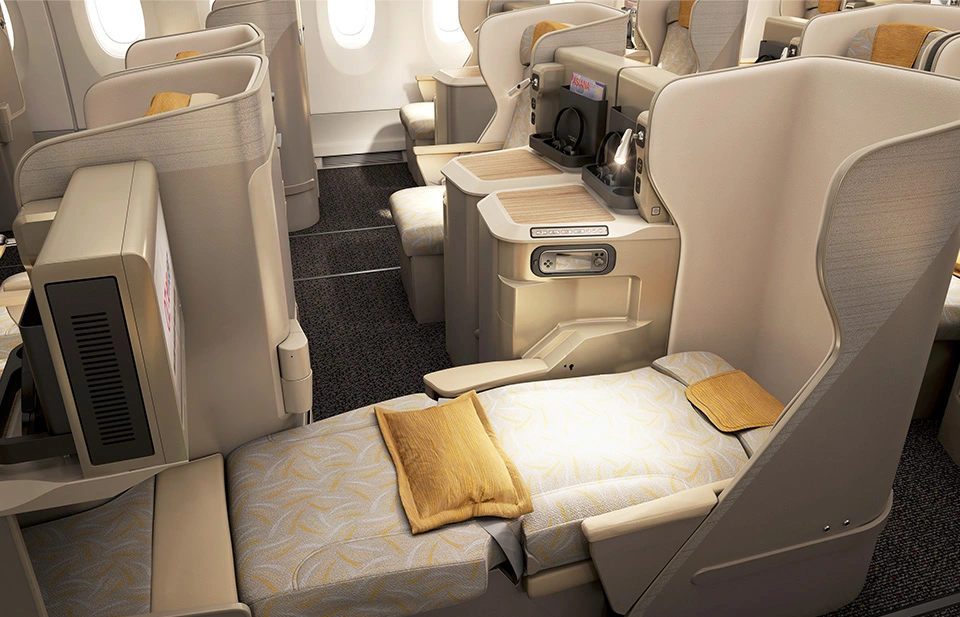
Asiana Airlines Full Cabin Refit
The transformation for Asiana Airlines (OZ) involves integrating Korean Air’s Prestige and Economy seating systems into its Airbus A350 fleet.
So far, two of the fifteen A350 aircraft have completed the upgrade and are already in commercial service. The new Prestige Class seats maintain the configuration of the prior Business Smartium seats, featuring a full flat pitch of 77 inches and a width of 22 inches.
Economy class seating remains consistent, with a pitch of 32-33 inches and a width of 18 inches, prioritizing traveler comfort during this transition.
The A350 serves as Asiana’s leading aircraft for North America, Oceania, and Southeast Asia routes and will be the first model to undergo these enhancements, with plans to extend upgrades across the fleet of 68 aircraft.
This initiative is viewed as a key strategy towards creating a unified product image. While visual aspects and in-flight manuals are being synchronized, essential services like meal offerings and entertainment will remain unchanged.
According to various reports, this change aims to foster a seamless branding experience for passengers as the airlines prepare for full integration.
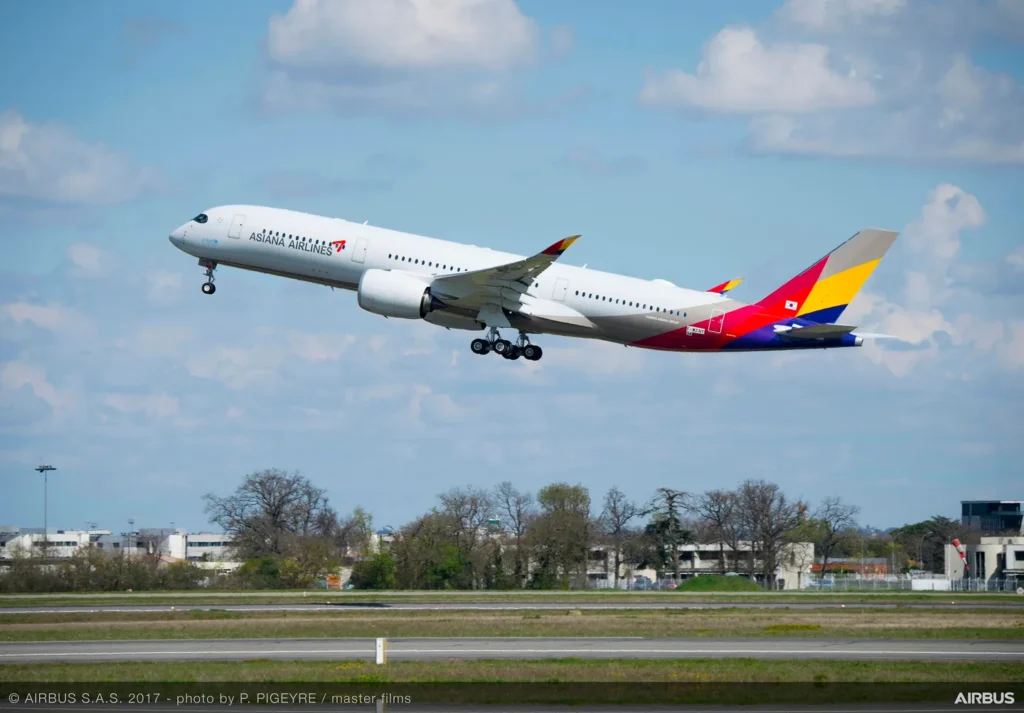
Infrastructure Integration
The upcoming merger is not limited to cabin updates. Asiana Airlines will shift its operations to Terminal 2 at Incheon International Airport (ICN) to align closely with Korean Air’s infrastructure.
Additionally, the main ticketing office has relocated from the Mapo District to the headquarters of Korean Air in Seosomun.
Training programs for employees and new hires are also moving to Gangseo District, enabling a more cohesive training environment.
Both airlines are reviewing safety and in-flight service manuals to standardize procedures.
A gradual integration process is being implemented, minimizing disruptions to both passengers and employees while ensuring compliance with regulations.
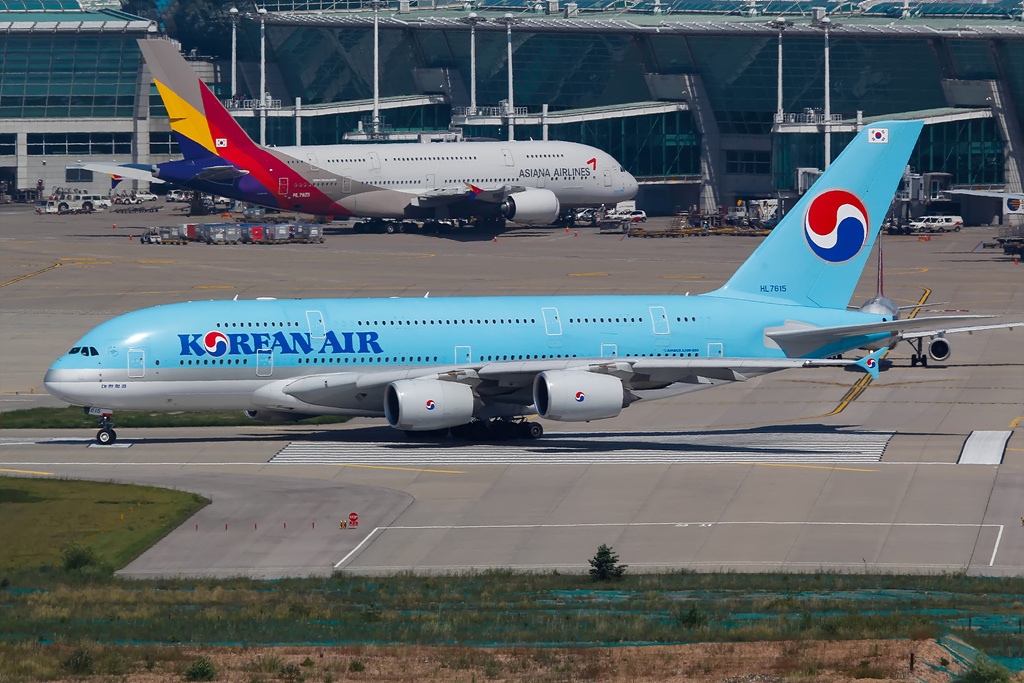
Korean Air and Asiana Airlines Merger
Korean Air has finalized its acquisition of a 63.9 percent stake in Asiana Airlines for 1.8 trillion won ($1.4 billion), culminating a four-year merger journey.
For a two-year period, both carriers will operate separately, with Asiana functioning as a fully owned subsidiary.
A detailed transition plan is in place to ensure gradual relocation of workforce, system unification, and enhanced financial management.
A primary focus will be on stabilizing Asiana’s high debt-to-equity ratio, emphasizing the strategic deployment of resources and operational efficiencies for sustainability.
Global Expansion and European Regulatory Approval
The newly merged entity seeks to become the seventh-largest airline globally by passenger volume, leveraging a fleet of around 250 aircraft while expanding their reach across Asia-Pacific and beyond.
To address competitive concerns raised by the European Union, Korean Air has identified T’way Air as a remedy carrier on key routes such as Barcelona, Frankfurt, Paris, and Rome. The takeover of Asiana’s cargo operations by Air Incheon also aims to boost competitiveness in the freight market.
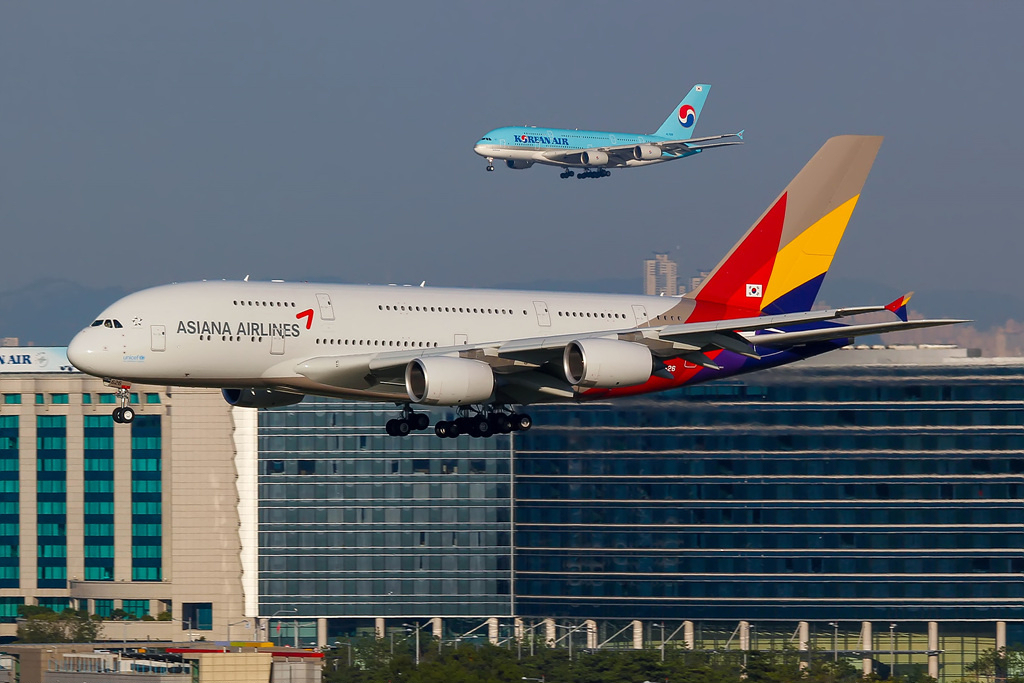
Future Roadmap and Challenges
Korean Air maintains minimal exposure to currency fluctuations, bolstered by a favorable aircraft ownership ratio. This positions the airline to pursue route restructuring and network optimization as integration progresses.
Experts highlight that the long-term success of this merger will depend on careful debt management and operational efficiency.
Key transition factors involve:
- Lightening inherited debt burdens
- Safeguarding uninterrupted flight service
- Ensuring a smooth organizational merger
- Addressing geopolitical and macroeconomic challenges
Industry observers remain optimistic about the merger’s long-term advantages, despite short-term hurdles. There are expectations that both Korean Air and Asiana Airlines will enhance their positions in the global market, reshaping the aviation landscape in South Korea.