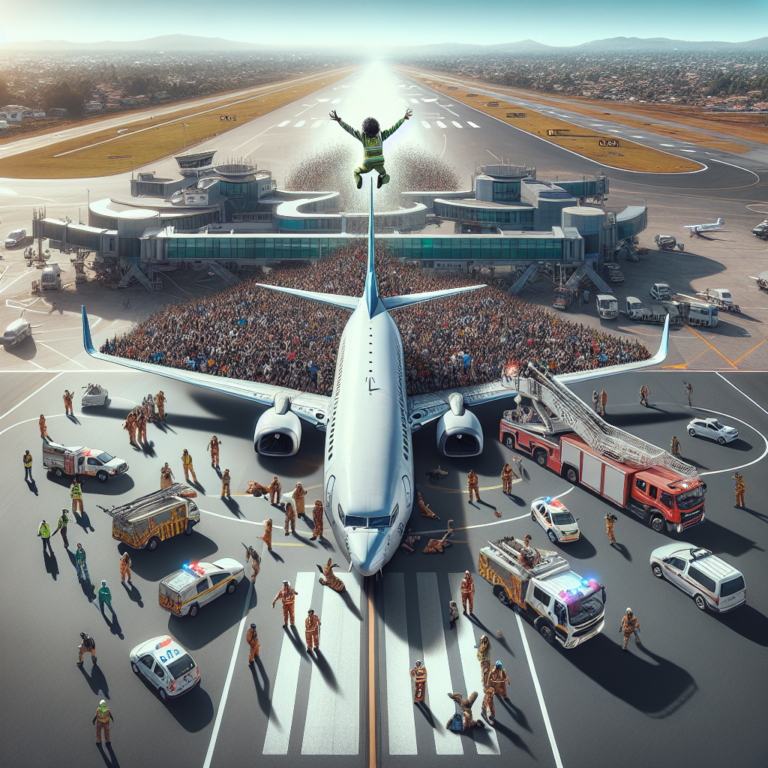
Qantas Flight from Sydney to Hong Kong Receives Bomb Hoax

Title: The Infamous Qantas Flight 755 Extortion: A Look Back at Australia’s Most Notorious Airline Hoax
Introduction
On May 26, 1971, Peter Macari executed a shocking extortion scheme that would forever alter the landscape of aviation security in Australia. He held 128 passengers and crew hostage aboard Qantas (QF) Flight 755, demanding an astonishing half a million dollars. Operating under the alias “Mr. Brown,” Macari’s audacious act turned a routine flight into a harrowing ordeal, revealing the vulnerabilities within the airline industry.
The Birth of a Hoax: Qantas Flight 755
The plot began in March 1971 when Macari was inspired by the television thriller "The Doomsday Flight." The show depicted a bomb with an altitude-sensitive switch hidden inside an aircraft—an idea that Macari found compelling. Witnesses reported him saying, “That would be a good way to make money,” foreshadowing the terror that would soon unfold.
- Preparation for the Scheme:
- In April, Macari befriended miner Francis Sorohan, who helped him steal gelignite and detonators.
- On May 11, Macari purchased an altimeter to measure aircraft altitude, a crucial element of his plan.
- He recruited an accomplice, “Poynting,” who typed threatening letters outlining ransom demands and bomb instructions.
The Threat Unfolds
On the fateful day of May 26, 1971, at 12:00 PM, Macari contacted the Australian Department of Civil Aviation, claiming he had planted a bomb aboard Qantas Flight 755’s Boeing 707. To validate his threat, he directed the authorities to locker 84 at Kingsford Smith International Airport (SYD), where police discovered letters and a mock explosive device constructed from gelignite and an altimeter.
- Key Details:
- The first letter demanded $500,000 for instructions on disarming the bomb.
- The second letter confirmed a similar device aboard the flight, while the third warned of detonation if the aircraft descended below 20,000 feet.
Flight 755 Under Siege
Qantas Flight 755 was en route from Sydney to Hong Kong, carrying 116 passengers and 12 crew members when Captain William Selwyn received the alarming notification of the threat. Authorities instructed him to maintain an altitude of 35,000 feet.
- Actions Taken:
- The flight was initially diverted to Brisbane but was redirected to Sydney due to emergency service capabilities.
- Crew members conducted extensive searches aboard the aircraft while passengers remained calm amidst the chaos.
Negotiations with the Extortionist
As Flight 755 circled off the coast of Mascot, Macari engaged in negotiations with Qantas representatives throughout the afternoon. He demanded $500,000 in unmarked bills to be delivered to Chifley Square.
- The Ransom Delivery:
- Macari arrived disguised in a stolen yellow Volkswagen Kombi, and the ransom was handed over by Captain R.J. Ritchie through a van window.
- Despite the presence of police vehicles nearby, the handover occurred without their knowledge.
At 6:00 PM, Macari’s final call indicated there was no bomb aboard the flight, allowing it to land safely at Sydney Airport after over six hours of terror.
The Investigation Intensifies
Following the incident, authorities offered a $50,000 reward, leading to more than 14,500 public calls. Voice analysis suggested that the perpetrator was likely an Englishman from the Midlands. Collaborations with Scotland Yard, Interpol, and the FBI helped narrow down the suspect list.
- Key Breakthroughs:
- The gelignite and detonators were traced back to Mount Isa Mines.
- Suspicious spending by Raymond Poynting, Macari’s accomplice, led to their eventual arrests in August 1971.
Justice Served
Both Macari and Poynting were charged with serious offenses, including demanding money with menaces. In January 1972, Macari was sentenced to 15 years in prison, while Poynting received a 7-year sentence.
- Aftermath:
- Macari served nine years before being paroled and deported to England in 1980. He later ran a fish and chip shop until his tragic death in 2013.
Conclusion
The Qantas Flight 755 extortion remains one of the most audacious hoaxes in aviation history, highlighting the critical need for enhanced security measures in air travel. As we reflect on this incident, it serves as a reminder of the past and the continuous evolution of aviation security protocols.
Call to Action
What are your thoughts on aviation security today? Share your insights or explore related articles for a deeper understanding of how such incidents shape our world.